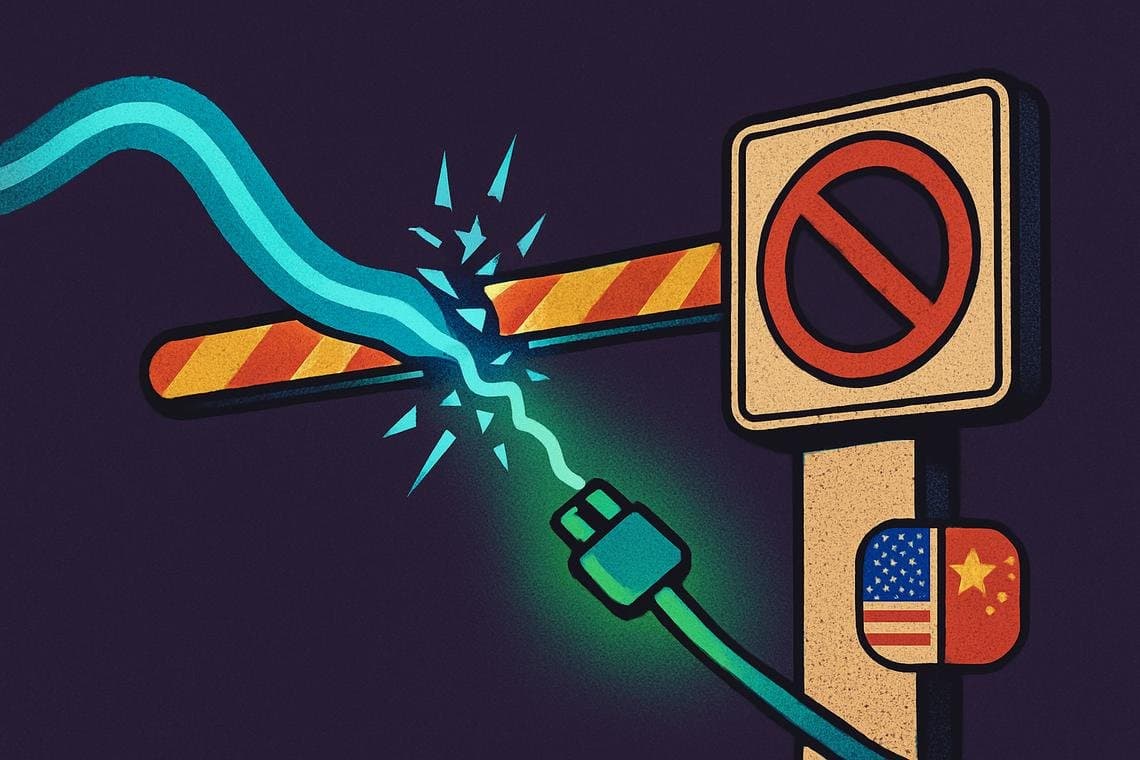
Mark Zuckerberg made headlines this week by rejecting calls to ban Chinese AI models, urging instead for the US to focus on outpacing China through innovation. The Meta CEO’s stance comes as China’s share of global AI web traffic jumped sharply from 3% to 13% in just two months after the launch of DeepSeek’s R1 in early 2025.
A RAND Corporation report tracking AI usage across 135 countries revealed that American AI platforms dominated with 93% of global web traffic as of August 2025. The rapid expansion saw the number of users visiting top AI services soar from 2.4 billion in April 2024 to over 8 billion by mid-2025. Despite these commanding figures, China’s surge signals a shifting dynamic in the AI landscape.
Innovation Versus Restrictions
Zuckerberg argues that banning Chinese AI tools would be a strategic misstep, replacing the need for technological progress with political barriers. He believes that the US should use its strengths in capital, developer communities, and cutting-edge technology instead of relying on export controls, which have limited China’s access to advanced chips like Nvidia’s H200 and AMD’s MI325X but with mixed effectiveness.
This view contrasts with more hawkish voices in Washington who see the AI race as a national security challenge requiring tougher measures. Still, Zuckerberg warns that overreliance on trade restrictions could slow AI adoption stateside and breed complacency in innovation efforts.
Meta’s call to innovate aligns with a broader industry push to maintain US leadership by fostering development rather than shutting competitors out. The AI battle between the US and China is not just about technology but strategy, investment, and ecosystem development.
This content is for informational purposes only and does not constitute financial advice.