Meta launched Muse Code on August 5, its terminal-based coding agent, and Muse Spark 1.2 model to compete directly with Anthropic's Claude Code and OpenAI's Codex. The move signals Meta's push into a market it largely sat out until now.
Muse Code handles entire engineering workflows across large codebases, not just individual snippets. Mark Zuckerberg claimed the agent can execute complete software engineering tasks, planning changes, writing code, and validating results all at once. Internal testing showed it built six game features simultaneously without breaking a sweat.
The Benchmark Reality Check
Performance numbers tell a different story. Muse Spark 1.2 scored 82.9% on Terminal-Bench 2.1, beating some competitors but losing to Anthropic's Opus 5. On DeepSWE 1.1 it landed third, not first. Meta knows it is not the market leader here, at least not yet.
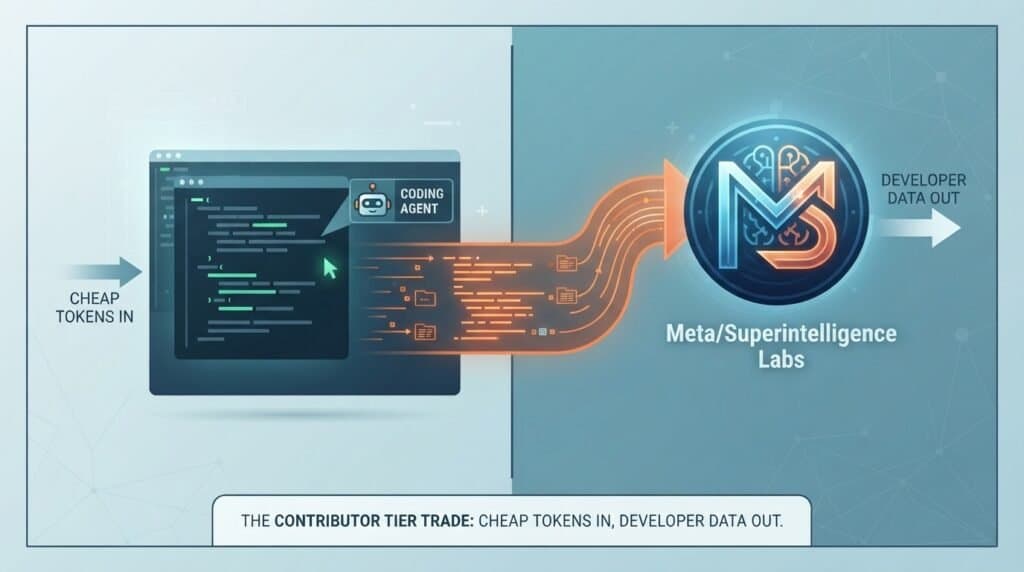
The real weapon is pricing. Meta is offering one of the cheapest API tiers for eligible developers, directly undercutting the incumbents who have already captured demand from startups like Cursor. Unlike its open-weight Llama models, Muse Code is paid software for macOS and Linux, tightly integrated with Muse Spark 1.2. This is Meta betting on volume over performance dominance.
Zuckerberg hinted more open-weight AI software launches are coming. The timing matters. As larger AI models get more expensive to run, pricing pressure could reshape who wins the code generation market. Meta's move suggests the commodity phase of AI tooling is just beginning.
This article provides market context and news on AI developments. It is not financial or investment advice.