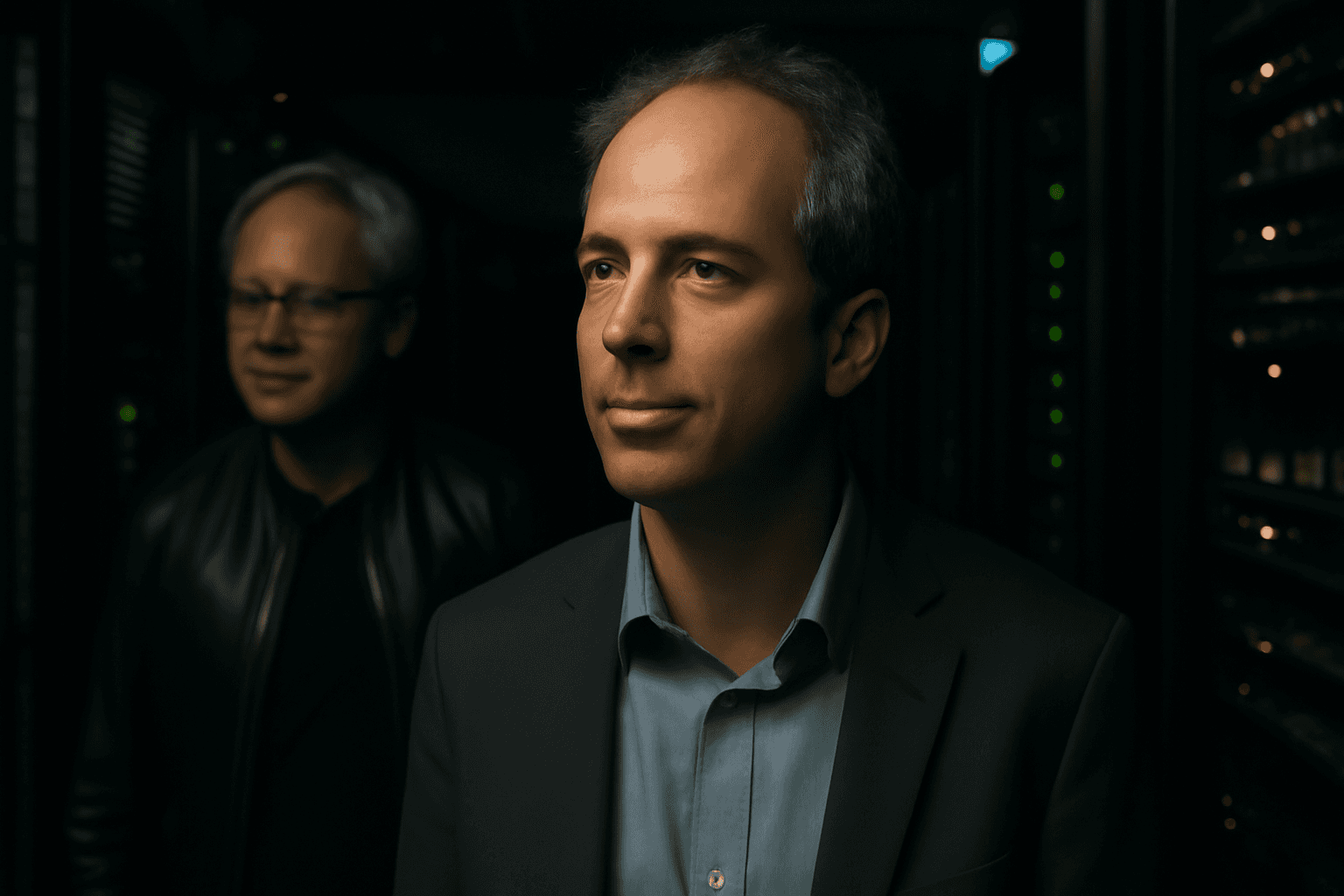
Nvidia has stepped up its support for artificial intelligence research with a major deal valued near $5 billion, joining forces with Safe Superintelligence (SSI), the AI lab started by Ilya Sutskever, a co-founder of OpenAI. Announced Monday, this alliance goes well beyond a simple investment, creating a deep technical and strategic partnership.
A key highlight is SSI gaining access to Nvidia’s Vera Rubin GPU infrastructure, which will increase the lab’s computing power tenfold. This leap is critical for SSI’s ambitious projects, which have remained largely under wraps since the lab’s inception two years ago.
Jensen Huang, Nvidia’s CEO, praised Sutskever’s groundbreaking work in AI since the early days of AlexNet. "We look forward to seeing the innovations that SSI will develop using our Vera Rubin platform," Huang said.
On the other side, Sutskever emphasized the importance of scaling their research with enhanced computational resources. "Our research deserves to be scaled, and a large Nvidia supercomputer enables us to do just that," he remarked.
Strategic Depth of the Nvidia-SSI Partnership
Unlike typical funding rounds, this collaboration was established after Nvidia gained rare access to SSI’s confidential research. This indicates a mutual commitment to advancing AI capabilities while ensuring alignment and safety.
SSI had previously raised $2 billion in April 2025, placing its valuation at $32 billion. This new deal significantly bolsters their resources and computational scale, positioning them for breakthroughs that could redefine AI development.
Nvidia’s strategic move reflects its continued dominance in mega-cap tech stocks, bolstered by its focus on AI hardware and partnerships. The company’s shares remain strong as investors watch these high-profile collaborations unfold.
Nvidia’s earlier $5 billion injection into SSI set a precedent, but this latest agreement appears more expansive, covering existing and future Nvidia architectures. The Vera Rubin GPU system will serve as a backbone for SSI’s experiments, amplifying their research capacity dramatically.