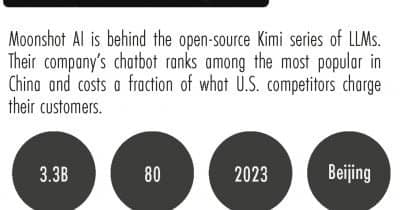
Moonshot AI, the Beijing-based startup behind the Kimi chatbot, is moving forward with plans for a Hong Kong initial public offering, aiming to raise over $2 billion with a valuation of up to $30 billion. This is a significant increase from its previous valuation of roughly $20 billion in earlier private funding rounds.
The IPO is scheduled for about six months from mid-July 2026, which places the potential listing in early 2027. Major Chinese investors such as Alibaba, Tencent, Meituan, and China Mobile back the company. CEO Yang Zhilin, who founded Moonshot in 2023, is leading a restructuring process to comply with Beijing's new regulatory environment for AI firms. Other Chinese AI companies like MiniMax and DeepSeek are also exploring public market options.
Market Impact of Kimi K3
The latest release from Moonshot, the Kimi K3 model, debuted at the World Artificial Intelligence Conference in Shanghai on July 17. With 2.8 trillion parameters, it claims to be the world's largest open-weight AI system. Its architecture allows external developers to access and build on the technology, contrasting with the closed models developed by US-based firms such as OpenAI and Anthropic.
Kimi K3 reportedly matches or surpasses US competitors including Anthropic's Claude and OpenAI's GPT in coding benchmarks, while operating at lower costs. The announcement caused a drop in shares of Nvidia and AMD, key semiconductor companies in the US. This echoes a similar market reaction in early 2025, when breakthroughs by DeepSeek led to a sharp selloff in US tech stocks, erasing hundreds of billions in semiconductor market capitalization.
The release of Kimi K3 also has implications for crypto and tech investors. Lower costs and open architectures could boost demand for decentralized AI compute resources, but they may reduce the premium for cutting-edge AI access, challenging protocols that rely on exclusivity. This dynamic is particularly relevant to projects involved in marketplaces for GPU resources and inference computing.