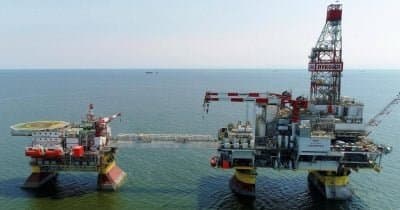
Between December 9 and 11, 2025, Ukraine’s Security Service (SBU) conducted a series of drone strikes targeting Russia’s Vladimir Filanovsky offshore oil platform in the northern Caspian Sea. The operation hit the platform at least four times, forcing a shutdown of production from over 20 wells. This marked the first confirmed Ukrainian attack on Russian offshore energy infrastructure in this region, signaling a significant extension of Ukraine’s long-range military capabilities.
Impact on Russian Energy Production and Regional Dynamics
The Filanovsky field is one of Russia’s major offshore oil assets, managed by Lukoil. Discovered in 2005 and operational since 2016, this platform contains estimated reserves of 129 million tons of oil and 30 billion cubic meters of natural gas. It typically processes about 120,000 barrels of oil daily, equivalent to roughly 6 million tons annually. The oil is primarily transported via the Caspian Pipeline Consortium (CPC), a critical export route that accounts for around 1% of global oil supply.
The strikes reportedly also affected the nearby Korchagin platform, a Russian military patrol vessel named Okhotnik, and two cargo ships suspected of supporting Moscow’s military logistics. The SBU emphasized that these actions targeted facilities actively contributing to Russia’s war efforts, aiming to hinder the financial resources fueling the conflict.
Strategic Shifts and Market Implications
Ukraine’s ability to strike offshore infrastructure nearly 700 to 900 kilometers from frontlines shows a notable evolution in its operational reach. The Caspian Sea is bordered by several countries, including Russia and Kazakhstan, which also exports oil via the CPC. Disruptions here can ripple beyond Russian borders, complicating regional energy flows.
The key question for energy markets now is how long the Filanovsky platform will remain offline. Extended downtime could tighten supplies and add pressure to global oil prices. The incident also highlights the vulnerabilities of energy infrastructure in conflict zones and the rising use of drone technology in strategic attacks.
Drone strikes on Russian oil facilities are becoming a recurring theme, indicating a broader campaign targeting Moscow’s economic lifelines.