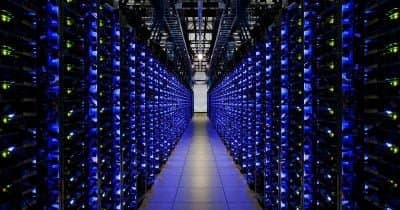
US data centers will gobble up between 325 and 580 TWh of electricity by 2028, more than doubling current consumption. That's 6.7% to 12% of the nation's entire power supply. The Union of Concerned Scientists warns this explosion, fueled by AI workloads and cloud expansion, could stick ratepayers with $886 billion to $978 billion in extra costs through 2050 if utilities keep betting on natural gas.
The problem is straightforward. Data centers consumed 176 TWh in 2023, about 4.4% of US electricity demand. But that was yesterday. Natural gas now powers over 40% of data center electricity, making it the single largest source. Utilities choose gas because it's faster to permit and build than renewables. The financial trap: when demand spikes faster than expected, utilities construct expensive gas infrastructure that becomes obsolete before it's paid off. Customers get saddled with the bill for stranded assets nobody uses.
Miners buying power plants, not electricity
Bitcoin mining has quietly entered this equation in ways that reshape the entire dynamic. MARA Holdings, one of the largest publicly traded miners, didn't just sign a power contract. The company bought a 505 MW natural gas plant in Ohio outright for $1.5 billion. That's vertical integration, a fundamental shift in how miners approach energy. Instead of depending on grid operators, they now control their own supply.
The same miners demonstrated something utilities actually need. In 2023, Bitcoin operations curtailed approximately 888 GWh of load when grid stress hit. Mining rigs can power down instantly. They can ramp back up just as fast when supply rebounds. An Azure cluster running enterprise workloads can't flip that switch. This flexibility makes miners valuable grid partners, not just load hogs.
The cost trap tightens
Ratepayers face real exposure here. Under the Union of Concerned Scientists' mid-growth scenario, stranded-asset risks climb as load accelerates. Utilities build. Demand plateaus or shifts. Infrastructure becomes uneconomical. The cycle repeats. Households pay the difference through higher electricity bills, regardless of whether they use data centers or not.
The math compounds over decades. $886 billion to $978 billion cumulative from 2026 to 2050 works out to roughly $30 to $32 billion annually by mid-century. That's real money moving from consumer wallets to utility balance sheets.
This article provides information about energy market trends and regulatory analysis. It is not financial advice or a recommendation to buy, sell, or hold any asset.