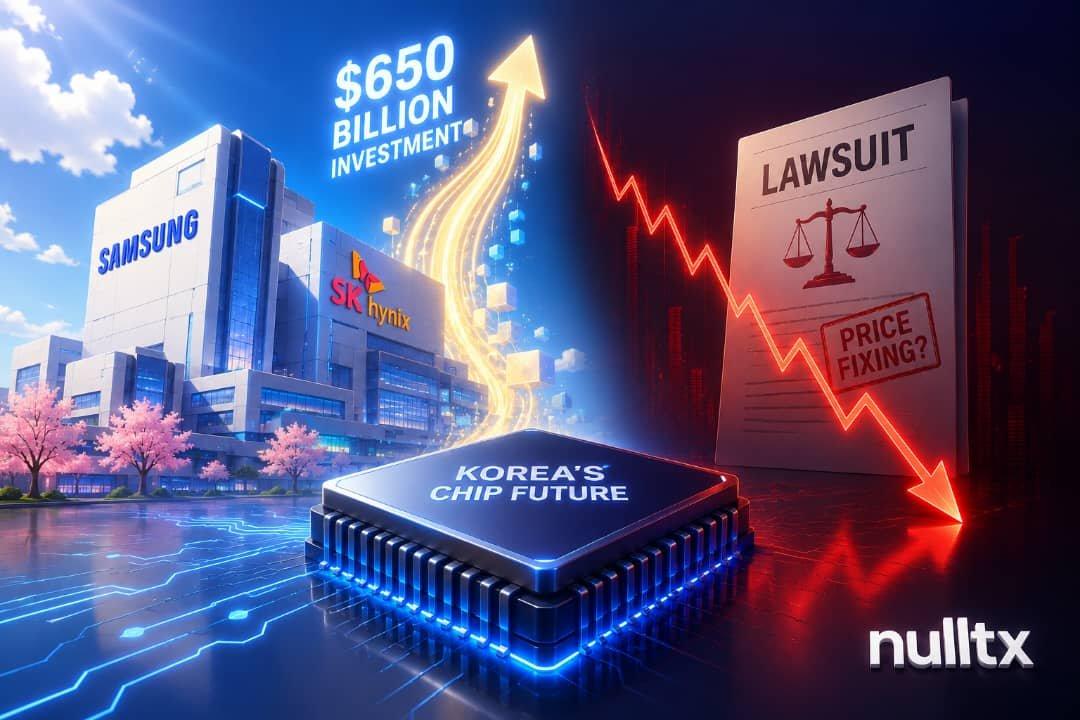
Samsung and SK Hynix are defendants in a lawsuit alleging they conspired to create a global memory chip shortage, coinciding with their announcement of a substantial $650 billion investment initiative. The lawsuit was filed in California and also names Micron Technology as a co-defendant.
Investment Plan Overview
In a move to foster regional economic growth, both tech giants disclosed plans to invest over 1,000 trillion won, or approximately $650 billion, in semiconductor manufacturing over the next decade. The investment aims to enhance South Korea's DRAM production capacity significantly, doubling output by 2028 and establishing 18.4 gigawatts of AI data center capacity by 2035.
The breakdown of the investment includes:
- Approximately 800 trillion won ($518 billion) for new semiconductor fabrication plants.
- 81 trillion won ($52.45 billion) designated for advanced high-bandwidth memory packaging facilities.
- 30 trillion won ($19.42 billion) allocated over 15 years for next-generation memory technologies.
Market Reaction
Following the announcement, both Samsung and SK Hynix stock prices saw declines of 5.3% and 3.4%, respectively. Investor skepticism stems from concerns regarding the timeline of actual production increases versus immediate financing costs. Analysts highlight the significant expense of building a single semiconductor fabrication plant, which can exceed 60 trillion won ($40 billion) and may take years to become operational.
The Korea Exchange even postponed a planned launch of options related to these stocks, reflecting apprehension about execution and funding risks amidst a broader market downturn of approximately 10% over the prior week driven by fears of overvaluation in AI sectors.
Legal Allegations
Concurrently with the investment announcement, the legal challenges surfaced. The lawsuit claims that Samsung, SK Hynix, and Micron colluded to restrict supply of DRAM chips intentionally, which has been a key factor in the soaring prices of memory components worldwide.
As the tech industry continues to battle over potential market manipulation, this case underscores the complex and often contentious nature of the semiconductor market.