Crypto users are often surprised when transaction fees unexpectedly surge, sometimes reaching up to fifty dollars for transfers that normally cost much less. These costs, often termed gas fees, network fees, or miner fees, are influenced by supply and demand dynamics similar to any other commodity.
The Purpose of Transaction Fees
Every blockchain network, including Bitcoin, Ethereum, and Solana, requires validation of transactions by a network of miners or validators. These participants are compensated through transaction fees for their efforts in verifying and permanently recording transactions. The resources required to perform this work include electricity, hardware, and bandwidth.
Transaction fees serve another critical function by discouraging spam. High costs associated with sending transactions deter malicious actors from overwhelming the network with unnecessary requests, ensuring that transaction processing remains efficient.
How Transaction Fees Are Determined
The calculation of transaction fees varies across blockchains but typically considers the workload involved and the level of competition for transaction space. On Bitcoin, fees are primarily based on transaction size in bytes; larger transactions come with higher fees due to the space they occupy in a block.
On platforms like Ethereum, fees also account for the computational complexity of transactions. Simple transfers incur a baseline gas fee, while more complex operations, such as token swaps or minting NFTs, demand higher fees due to their greater processing needs. Since the 2021 EIP-1559 upgrade, Ethereum and many EVM-compatible chains utilize a dual-fee model, combining a base fee that fluctuates with network congestion and tips for validators. Contrastingly, Solana maintains a low, stable fee structure and relies on rapid block times to manage demand.
The Impact of Network Demand on Fees
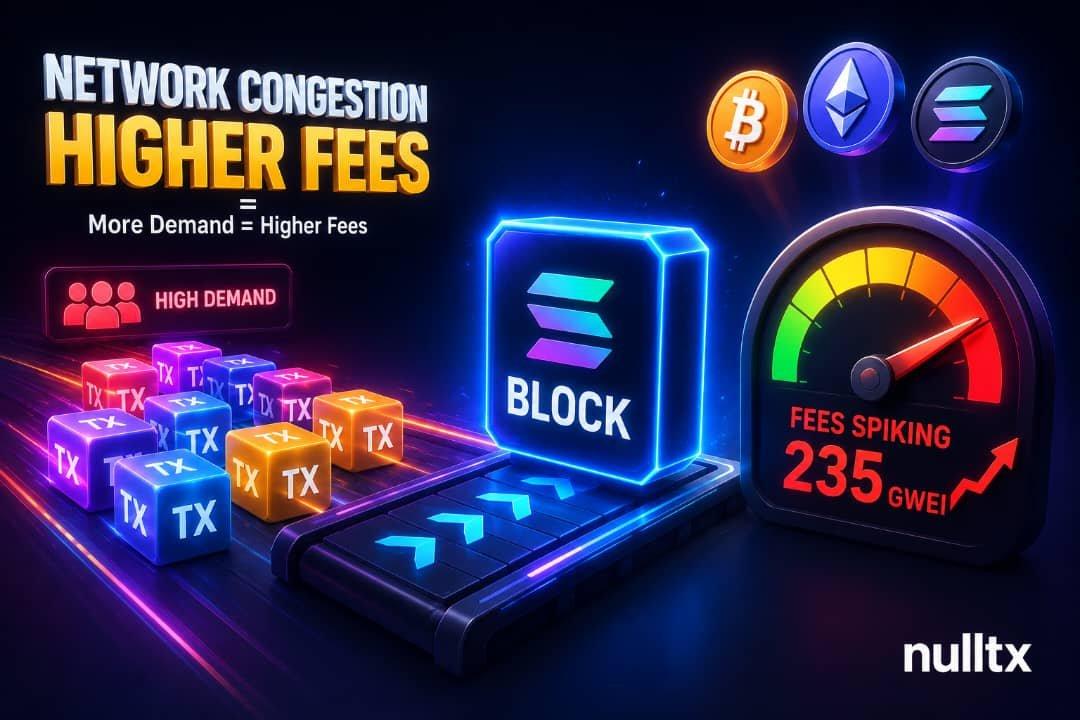
Each blockchain has a set limit on how many transactions it can handle per block. When demand for transaction space surges, fees escalate accordingly. Conversely, during quieter periods, fees drop as capacity is available. This pattern parallels surge pricing common in ride-sharing services.
Understanding these dynamics can help cryptocurrency users better anticipate and manage transaction costs, especially during peak usage periods.