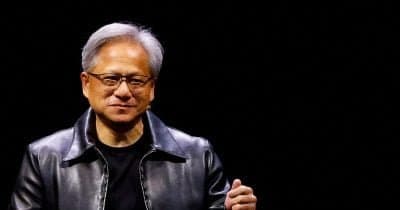
Nvidia’s Jensen Huang delivered a blunt message to US policymakers on July 23, dismissing widespread fears about artificial intelligence as exaggerated and misleading. He urged them to resist letting speculative fears drive policy decisions that could hamper America’s edge in AI innovation.
Huang warned that the current wave of anxiety surrounding AI’s potential risks is largely shaped by science fiction narratives rather than scientific evidence. "The idea that AI will bring about the end of humanity, it’s complete nonsense," he said plainly.
Concerns Over Overregulation and Global Competition
His intervention came amid growing tensions between the US and China over AI technology. On the very day Huang spoke, Treasury Secretary Scott Bessent announced potential sanctions targeting Chinese AI models. Huang cautioned that overzealous regulation could backfire, creating openings for foreign rivals to exploit safety concerns as a competitive weapon.
Rather than relying on a small circle of tech executives, Huang called for a broader spectrum of voices in shaping AI policies to ensure balance and avoid unintended consequences.
The stakes are significant. In March 2026, Huang projected that the global demand for AI-related chips would hit around $1 trillion by 2027. This surge is propelled by the rapid expansion of AI applications training, inference, deployment that span nearly every industry.
Meanwhile, Nvidia faces increasing scrutiny over its chip exports to Chinese companies. Chinese firms like Moonshot AI continue releasing open-source AI models, challenging assumptions that export controls alone can preserve US supremacy in AI. Huang has championed the creation of a unified federal framework for AI regulation, aiming to avoid a confusing patchwork of state rules and provide clearer guidance for businesses.