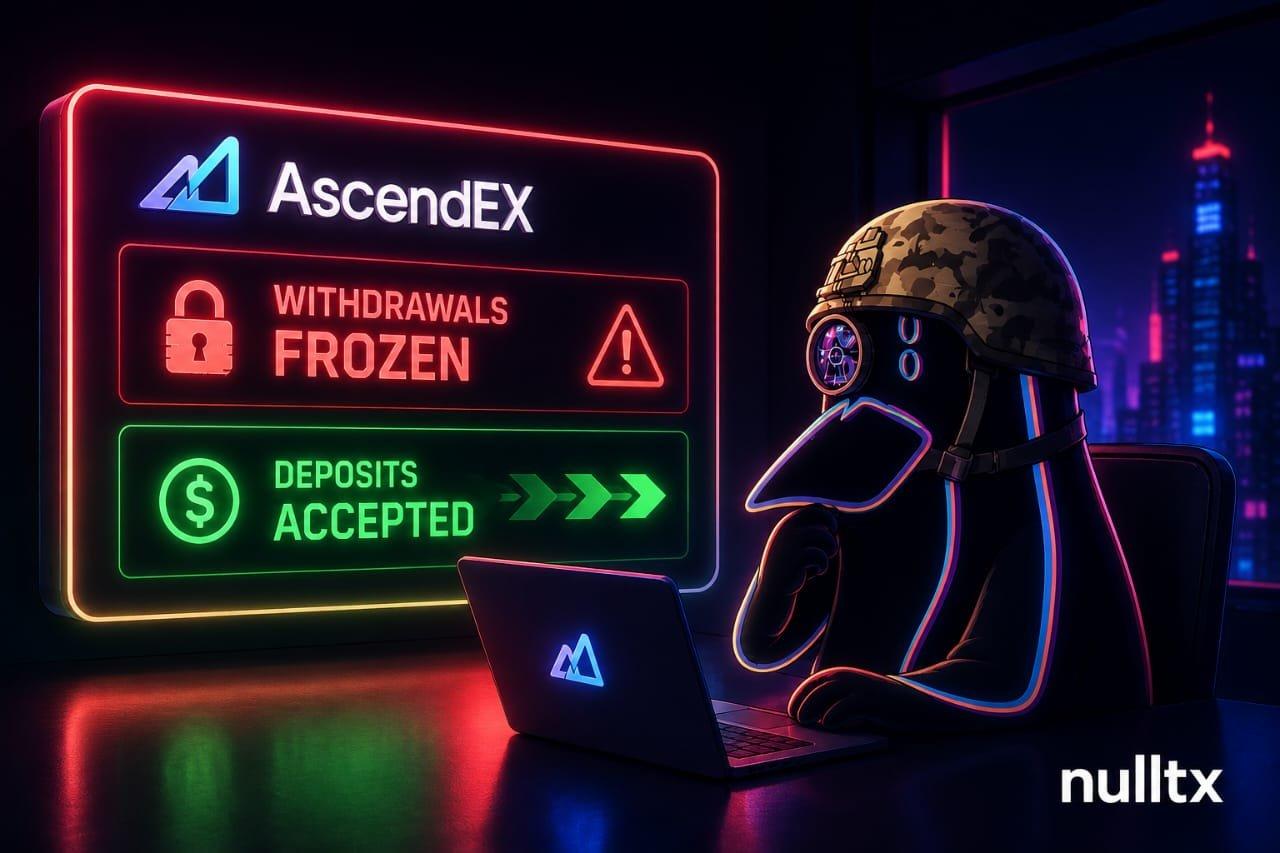
Blockchain investigator ZachXBT has raised concerns regarding the centralized exchange AscendEX, formerly known as Bitmax, as user withdrawals remain frozen while deposits continue to be accepted. This situation has historically been associated with severe exchange failures in the crypto sector.
For the past nine days, AscendEX has not issued any updates on social media since ZachXBT first highlighted the issue. Co-founder George (Jing) Cao has reportedly stopped responding to user inquiries, including from large-scale victims who have attempted to raise their concerns multiple times.
ZachXBT is now urging affected users to file reports with law enforcement and financial regulators in their countries, indicating that the situation has escalated beyond typical operational problems found in exchanges.
Silence and Withdrawal Concerns
According to updates on ZachXBT's Telegram channel, the exchange's lack of communication, combined with the freezing of withdrawals and acceptance of new deposits, is raising alarm bells within the crypto community. This pattern is often seen as an early sign of liquidity crises.
Details regarding specific cases, such as a large victim who has faced difficulties in contacting AscendEX's co-founder, underscore the seriousness of the situation. ZachXBT's message to users is clear: do not await an update from the exchange; instead, they should act by reporting to appropriate authorities.
Analysis of On-Chain Data
In an earlier post dated June 26, ZachXBT analyzed on-chain data, revealing troubling findings. After investigating numerous reports of delayed withdrawals, he examined AscendEX's hot wallets through platforms like Arkham Intelligence and TRM Labs. His analysis indicated a lack of substantial holdings in major tokens such as ETH, USDT, and SOL the very assets that users are attempting to withdraw.
The absence of large-cap token reserves is a significant indicator of potential withdrawal issues. While it does not solely confirm insolvency, such a reserve profile closely mirrors conditions observed in prior high-profile exchange failures, which ultimately left users unrecoverable funds.