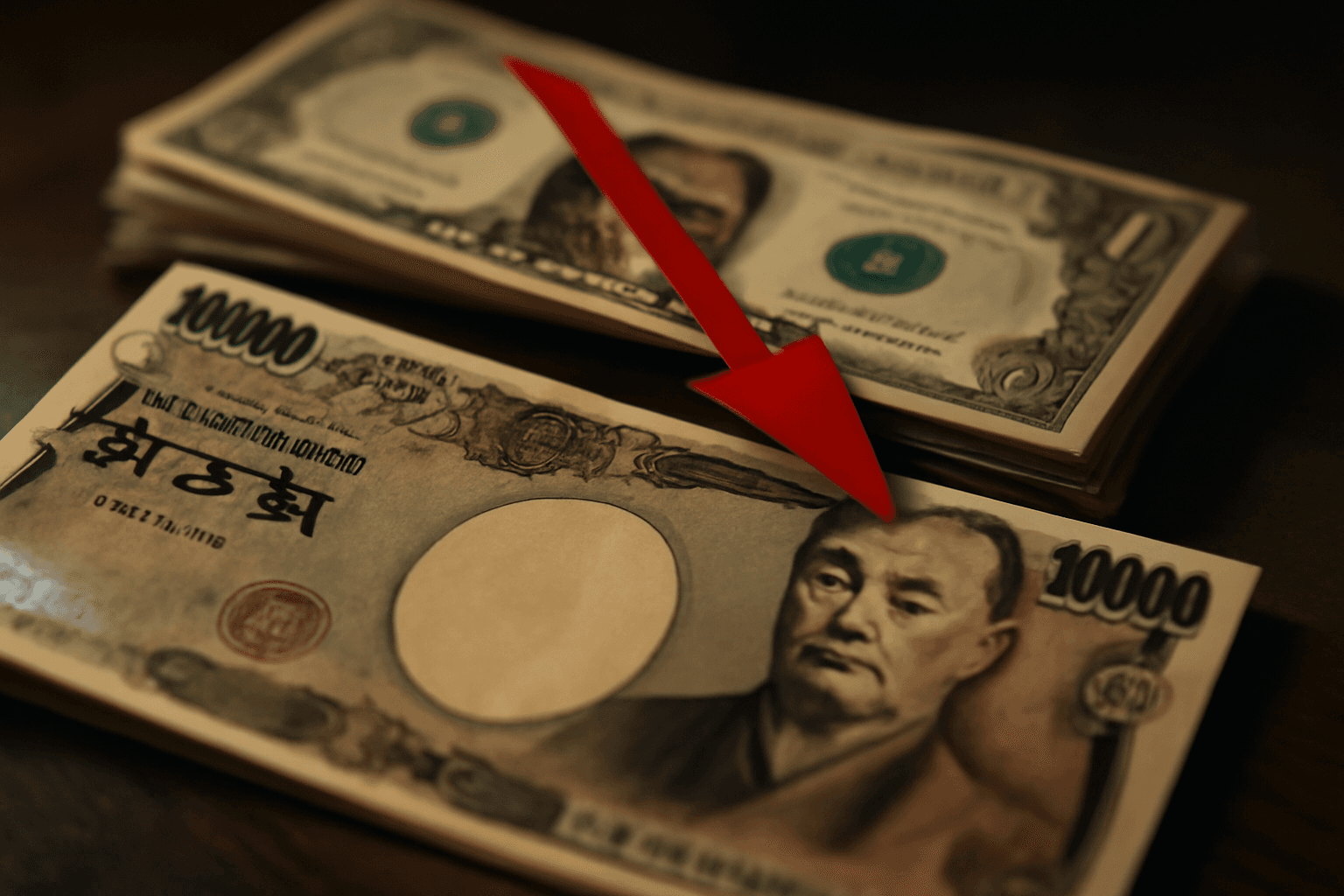
The Japanese yen plunged to levels unseen in about 40 years against the U.S. dollar, closing the week with its steepest drop since May. Early Friday in Asian trading, the USD/JPY rate hovered near 163.90, signaling persistent weakness for Japan's currency.
Despite verbal warnings from Japanese Finance Minister Satsuki Katayama about looming "appropriate and bold action," market players largely ignored these signals. Experts say even a physical intervention in currency markets may only delay further depreciation unless the Bank of Japan tightens monetary policy more aggressively.
Pressure mounted Thursday when U.S. Treasury officials called on Japan to curb excessive exchange rate volatility, explicitly urging the Bank of Japan to adjust its stance. This comes as the U.S. dollar edges toward a weekly gain of roughly 0.9%, marking its strongest rally since May, although the dollar index slipped slightly to 101.35 on Friday.
Inflation data from Japan added fuel to the dollar's strength: in June, Japan's consumer price index rose to 1.7% year-over-year, up from 1.5% in May. Core inflation climbed to 1.6%, posting its first monthly increase since March. These figures arrived days before the Bank of Japan's next policy meeting, where rates are widely expected to remain unchanged, leaving markets largely unmoved.
Energy prices also contributed to the dollar's momentum, with crude oil surpassing the $100 per barrel mark, rekindling inflation concerns globally. Meanwhile, escalating geopolitical tensions in the Middle East, including warnings of possible U.S. military strikes on Iran and advancing Houthi forces, further unsettled currency markets.
Earlier this year, Japan spent a record 11.7 trillion yen (about $73 billion) defending the yen from sharp declines. Analysts now warn that another large-scale currency intervention could be imminent if the yen approaches critical levels above 164.
With the Bank of Japan sticking to its ultra-loose monetary policy, the yen's decline appears likely to continue as external pressures mount and the dollar remains solid.