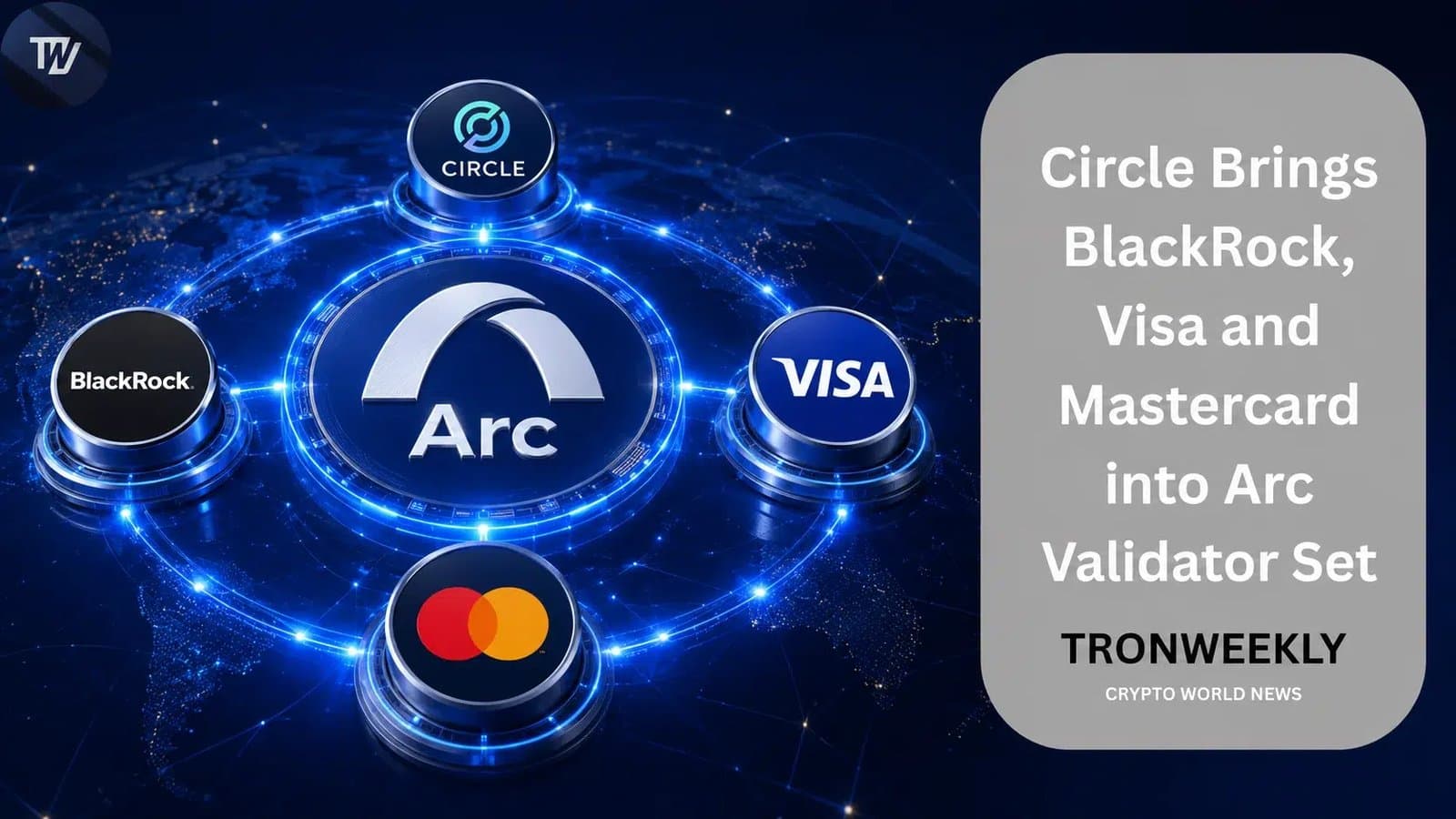
Circle's Arc network just added some seriously heavyweight validators to its roster. BlackRock, Visa, and Mastercard are boarding the founding validator group, arriving just weeks before the mainnet goes live on September 16. The move signals that institutional finance is done experimenting with crypto infrastructure and ready to move capital onto decentralized rails built specifically for settlement and tokenized assets.
The validator cohort announced August 5 reads like a who's who of global finance. Beyond the three tech giants, you've got DTCC, Standard Chartered, ICE, Galaxy, MoneyGram, SBI Group, and Sumitomo Corporation all signing on to secure the network. Over 100 builders and institutions are already constructing applications on Arc's private mainnet. These validators aren't just window dressing. They'll handle network security and support scalable on-chain applications meant to move billions in institutional money.
What BlackRock Actually Wants from Arc
BlackRock didn't join Arc just to own a validator seat. The firm plans to launch BUIDL on the network, which is essentially BlackRock USD Institutional Digital Liquidity Fund packaged for on-chain deployment. Subscription, redemption, and asset movement would all happen via blockchain rails. Robert Mitchnick, BlackRock's global digital assets chief, laid out the logic: infrastructure built for a specific purpose can dramatically speed up settlement and collateral movement. Faster ops means institutions can move money around the clock instead of waiting for banking hours.
Circle and DTCC are going further. They've partnered to build tokenized securities infrastructure focused on assets held in the Depository Trust Company vault. Launch is slated for late 2027. The payoff is obvious. Tokenized settlement cuts days off settlement cycles, enables extended trading windows, and eliminates friction that costs the industry billions annually.
Why This Actually Matters for Crypto
Arc isn't some speculative L1 chasing yield farmers. The network was built for compliance, security, and operational robustness. It's designed to handle stablecoin payments, tokenized assets, and institutional settlement at scale. Third-party apps can tap tokenized assets for stablecoin-native settlement while keeping all the legal protections and rights attached to traditional holdings.
BNY Mellon and Standard Chartered are already working on Arc integration. Circle is plotting out custody services, stablecoin infrastructure, foreign exchange settlement, and repo transactions. No launch dates yet on those pieces, but the roadmap is clear. We're looking at a network that could eventually handle trillions in daily volume across multiple asset classes. That's not hype. That's what happens when you get DTCC, BlackRock, and Visa aligned around a single technical standard.
This article is informational only and should not be considered financial advice. Institutional blockchain networks remain experimental, and regulatory frameworks continue to evolve.