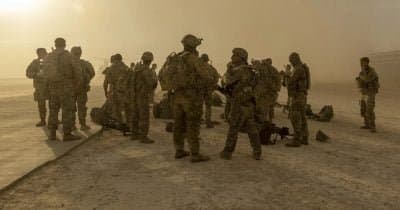
US military forces have removed Patriot air defense systems from Iraq, with the final 2,000 troops based in Kurdistan set to leave by the end of September 2026. This marks the near-complete American military withdrawal from the country, reshaping the region’s security landscape and sending ripples through global markets.
Security Shifts and Regional Stability
Back in January 2026, US troops vacated federal Iraqi territory, including key bases like al-Asad Airbase. The remaining presence in Kurdistan is the last chapter of a drawdown originally agreed upon in 2024. Iraqi Prime Minister Ali al-Zaidi’s recent meeting with US President Donald Trump reiterated the September deadline but also highlighted a strategy where US troops pull out while US companies increase their economic footprint and militia disarmament gains focus.
Iraq, as OPEC’s second-largest oil producer, plays a key role in energy markets. Past US withdrawals, such as the chaotic pullout in 2011 that preceded the rise of ISIS, show how sudden security vacuums can unsettle the region and trigger market volatility. Even the more controlled 2021 drawdown coincided with sharp swings in oil prices.
Impact on Oil and Crypto Markets
Energy market fluctuations often serve as a conduit for broader risk sentiment that spills into crypto assets. When geopolitical tensions escalate, Bitcoin’s narrative as a non-sovereign store of value tends to attract investors from vulnerable regions, driving demand upward. However, the altcoin segment usually suffers as risk appetite shrinks and capital moves toward perceived safe havens.
Al-Zaidi’s plan to open Iraq’s economy to more US corporate investment hints at potential modernization. The country’s cash-heavy banking system and young population are traits linked with increased crypto adoption in emerging markets. This suggests that despite short-term uncertainties, the crypto sector could see fresh interest from Iraq’s evolving financial environment.
The market will closely watch oil price behavior as the September withdrawal deadline approaches. A spike in crude prices driven by fears of a security vacuum would add pressure on risk assets. Conversely, a stable transition might ease some of the current jitters.
This content is informational and does not constitute financial advice.