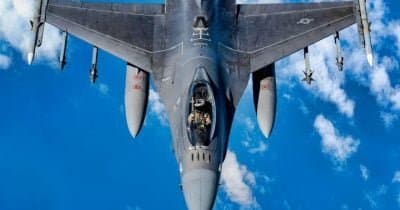
A Ukrainian F-16 fighter jet downed a Russian drone using its internal Gatling gun, marking a tactical milestone in the country's air defense operations. The kill comes as Kyiv integrates Western-supplied jets into a layered defense system designed to handle the relentless drone swarms Moscow keeps sending over Ukrainian airspace.
The F-16 has been central to Ukraine's strategy since arriving in the conflict zone. These jets, originally built during the Cold War to counter Soviet threats, are now doing exactly that, though the theater and circumstances shifted decades later. Each successful intercept matters because Ukraine faces saturation attacks, waves of drones designed to overwhelm defenses through sheer numbers rather than sophistication. A single F-16 with its rotary cannon offers precision at a moment when precision is scarce.
The challenge remains scale. Ukraine operates fewer than 80 F-16s across its entire fleet, a figure insufficient to maintain constant air patrol over all contested regions. Russian drone production, by contrast, runs into the thousands monthly. The jet's Gatling gun carries roughly 500 rounds and can fire at speeds exceeding 6,000 rounds per minute, yet each sortie consumes fuel and pilot hours that cannot be easily replaced.
Market observers view the development as evidence that Ukraine's air defenses are hardening. Prediction markets have already adjusted odds around the possibility of territorial recapture, suggesting investors believe enhanced air superiority could shift battlefield dynamics. Whether one successful intercept translates into consistent, scalable defense against drone swarms remains the open question. Ukraine needs not one kill but dozens daily to blunt Moscow's aerial campaign.
This article covers military and geopolitical developments with market implications. It is informational only and does not constitute investment advice or predictions about future conflict outcomes.