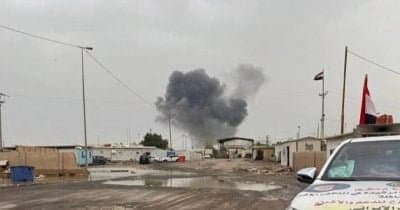
Two people were killed at the Shalamcheh border crossing when a U.S. airstrike hit the site, Iran's state media reported on July 22, citing an Iranian security official. The crossing sits on the Iraq-Iran frontier and serves as one of the busiest overland trade and transport corridors between the two countries, making it a commercially significant target distinct from purely military sites struck in earlier exchanges.
A Conflict Expanding Beyond Military Targets
The strike at Shalamcheh is notable because it follows a pattern of escalation in the ongoing U.S.-Iran military confrontation that has moved progressively from designated military installations toward infrastructure with broader economic relevance. Previous rounds involved Iranian retaliatory actions after U.S. strikes, and each cycle has narrowed the gap between battlefield assets and civilian-adjacent chokepoints. Shalamcheh had been targeted before, but the latest strike and its reported casualties mark another step in that trajectory.
The identity of the two individuals killed has not been confirmed by U.S. officials, and Washington had not issued a public statement on the incident at the time of publication. Iran's account, delivered through state media, is the primary source. That asymmetry in information is itself consistent with how both sides have managed disclosure throughout the conflict.
What Prediction Markets Are Pricing In
According to market analysis published alongside the initial report, the probability of the Iranian regime falling by 2027 has edged up to 11% on the relevant prediction market, a slight increase attributed in part to continued military pressure. That figure reflects a market still treating regime continuity as the overwhelming base case, even as the frequency of strikes and the geographic spread of targets both increase. Any significant moves by figures such as Mojtaba Khamenei or direct statements from U.S. President Donald Trump could shift that probability more sharply, according to analysts tracking the market.
The Shalamcheh crossing, if kept out of service for an extended period, would disrupt trade flows that Iraqi and Iranian border communities depend on directly. Observers are watching whether diplomatic channels open in parallel with the military exchanges, or whether the strikes continue without any accompanying negotiation signal.
This article is for informational purposes only and does not constitute financial or investment advice.