Ethereum's weekly transaction count climbed to 1.8 million, touching a peak of 21 million at one point, while the median transaction fee fell to an all-time low of $0.008. That gap between surging activity and collapsing costs is the clearest signal yet that the network's scaling overhaul is delivering real results.
The numbers trace back to two key protocol upgrades. Pectra expanded L2 blob throughput, giving layer-two networks more room to pack in transactions. Fusaka pushed data availability up by 8x. Together they shifted the computational load off mainnet without cutting Ethereum out of the settlement loop. Total blob fees have now reached 1.492 million ETH, according to Dune Analytics, a figure that reflects deep adoption of proto-danksharding: the mechanism that stores transaction data in temporary blobs rather than permanent calldata, keeping costs low for users.
Who is driving L2 volume
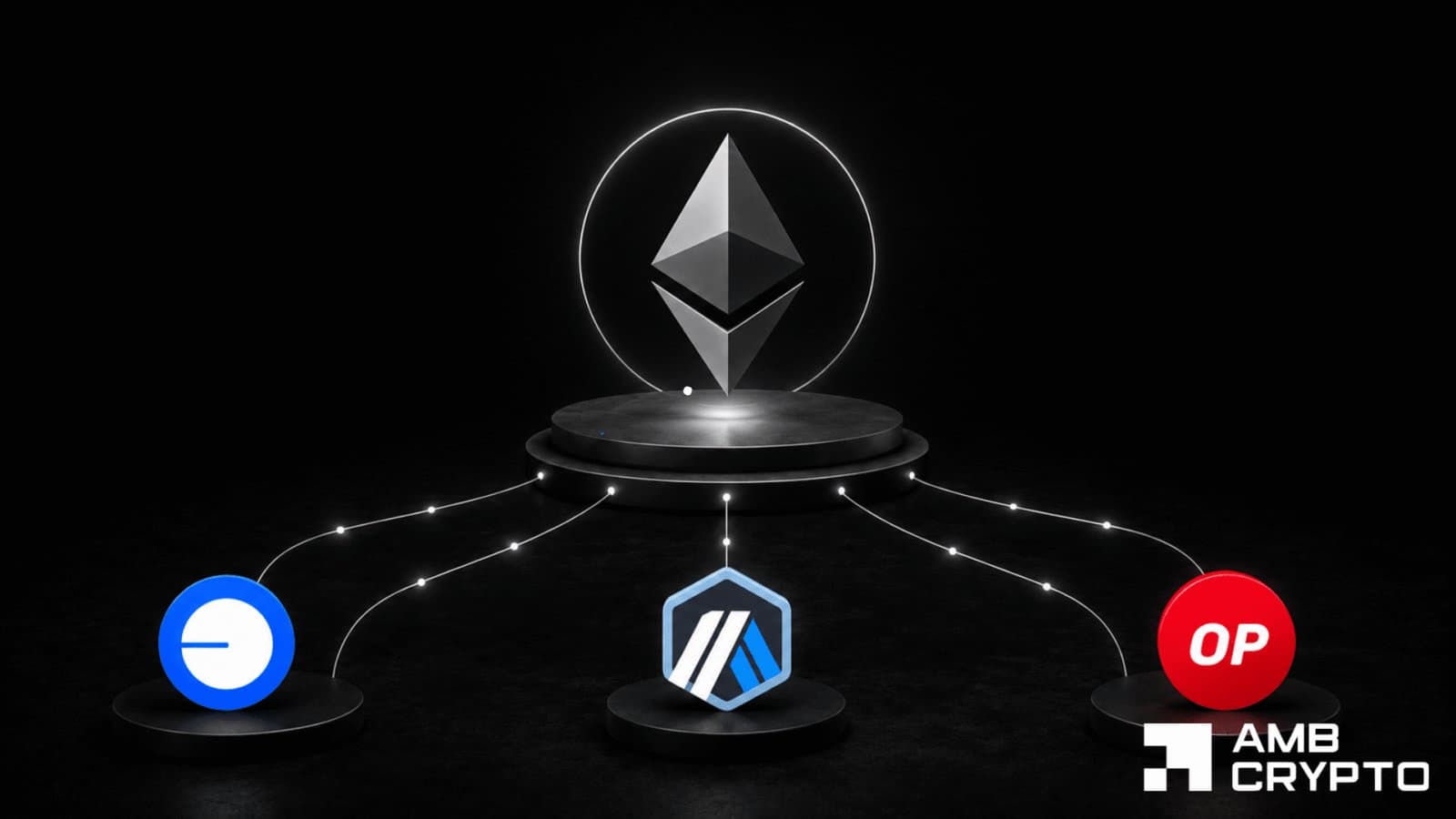
Transactions on layer-two networks have surged sharply since late June. The biggest percentage mover is Robinhood Chain, up 30,922% in monthly transaction count, now accounting for 13.9% of all L2 activity. In raw volume, though, Base holds the lead. The Coinbase-backed chain processed roughly 248.3 million transactions, or 29.1% of the total, with a 13.4% monthly increase. Arbitrum One and Optimism posted stronger growth rates at 22.2% and 19.2% respectively, per Token Terminal data.
On the capital side, Arbitrum remains one of the top destinations for locked value even as security incidents continue to draw scrutiny across L2 infrastructure. Total value locked across Ethereum layer-two networks stands at $37.41 billion, roughly half of what sits on the ETH mainnet itself. Base leads with $11.86 billion TVL, up 1.04%. Arbitrum One and OP Mainnet follow. ZKsync is the exception in that group, posting a TVL decline while peers moved higher, according to L2BEAT.
Monthly active users on Ethereum rose 2.9% to approximately 8.3 million, and the monthly transaction count is up 15% over the prior period. The user growth alongside cheaper fees suggests the scaling changes are pulling in participants who would have found mainnet costs prohibitive a year ago.
This article is for informational purposes only and does not constitute financial advice or an investment recommendation.