Brent crude hit $83.30 per barrel on July 22 after Donald Trump announced a renewed blockade on Iran's oil shipping route through the Strait of Hormuz, imposing fresh U.S. sanctions and military restrictions on the passage. West Texas Intermediate followed, climbing to $78.14. The Dow Jones Industrial Average fell in parallel, as traders priced in the risk of sustained supply disruption feeding into inflation.
Why the Strait of Hormuz Changes the Calculus
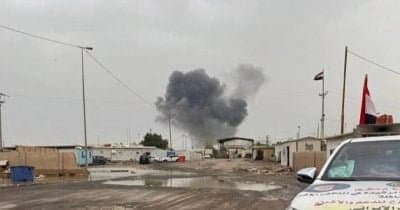
Roughly 20% of globally traded oil moves through the Strait of Hormuz. Any credible threat to that chokepoint tends to compress the supply side of the market almost immediately, and Trump's announcement was read as exactly that kind of credible signal. The move comes against a backdrop of already tight global inventories, which left little cushion for traders to absorb the news. Equities bore the secondary blow: inflation fears tied to energy costs weighed on Dow components, particularly industrials and consumer-facing names sensitive to transportation costs. The recent U.S. airstrike at the Iraq-Iran border crossing had already put the region on edge in the days before the blockade announcement.
Prediction Markets Shift on All-Time High Probability
Crude oil's all-time high sits above $147 per barrel, set in July 2008. The probability of a new record by December 31 is now priced at 16.5% on prediction markets, up from 12% just one week earlier. That is a meaningful four-and-a-half-point move in a short window. The September 30 contract tells a more cautious story: the likelihood of hitting a new high by that date slipped slightly to 6.5% from 8% the prior day, suggesting participants see the risk as a longer-dated event rather than an imminent one. The spread between those two figures implies the market is betting on a slow-burn escalation rather than a sudden price shock.
Observers are now watching for responses from OPEC member states, several of which have competing interests in any Hormuz disruption scenario, and from the European Union, which has its own diplomatic channels with Tehran. U.S. domestic military posture near the Gulf will also feed directly into how quickly the risk premium in crude either builds or unwinds over the coming weeks.
This article is for informational purposes only and does not constitute financial or investment advice.