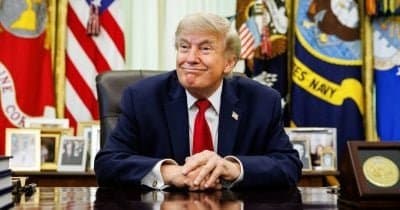
President Donald Trump’s financial disclosures for 2025 revealed he earned more than $1 billion from cryptocurrency ventures during his first year back in office, throwing a wrench into ongoing efforts to pass full crypto legislation.
Estimates place the total gains between $1.2 billion and $1.43 billion, with the bulk coming from two main sources: the World Liberty Financial project, a DeFi initiative launched by Trump’s family in 2024, and the notorious $TRUMP meme coin. The World Liberty Financial project reportedly controls 75% of its token sale proceeds, funneling nearly $500 million to $594 million into Trump-related entities. Meanwhile, $TRUMP generated roughly $635 million in profits, even as retail investors suffered massive losses its token price has plummeted over 97% from peak values.
Legislative Roadblocks and Political Conflict
These revelations have complicated bipartisan discussions around the Clarity Act, a bill aiming to provide a regulatory framework for the crypto industry. Democrats, led by Senator Elizabeth Warren, are pushing for tighter ethics rules in the legislation to block presidents and their families from profiting off digital assets while in office. Warren criticized the current draft for loopholes large enough to drive a presidential motorcade through, emphasizing the conflict of interest posed by Trump’s crypto earnings.
One contentious proposal in the Senate suggests banning federal officials from issuing digital assets until 2029, a measure that has angered Republicans as government overreach and some Democrats as insufficient. As a result, progress on the Clarity Act has stalled, leaving the crypto market structure bill in limbo despite growing demands for regulatory clarity following the 2025 GENIUS Act focused on stablecoins.
Investors now face uncertainty as political battles overshadow technological and market considerations. Trump’s crypto windfall highlights the challenge of crafting laws that can withstand conflicts of interest at the highest government levels without paralyzing industry regulation.