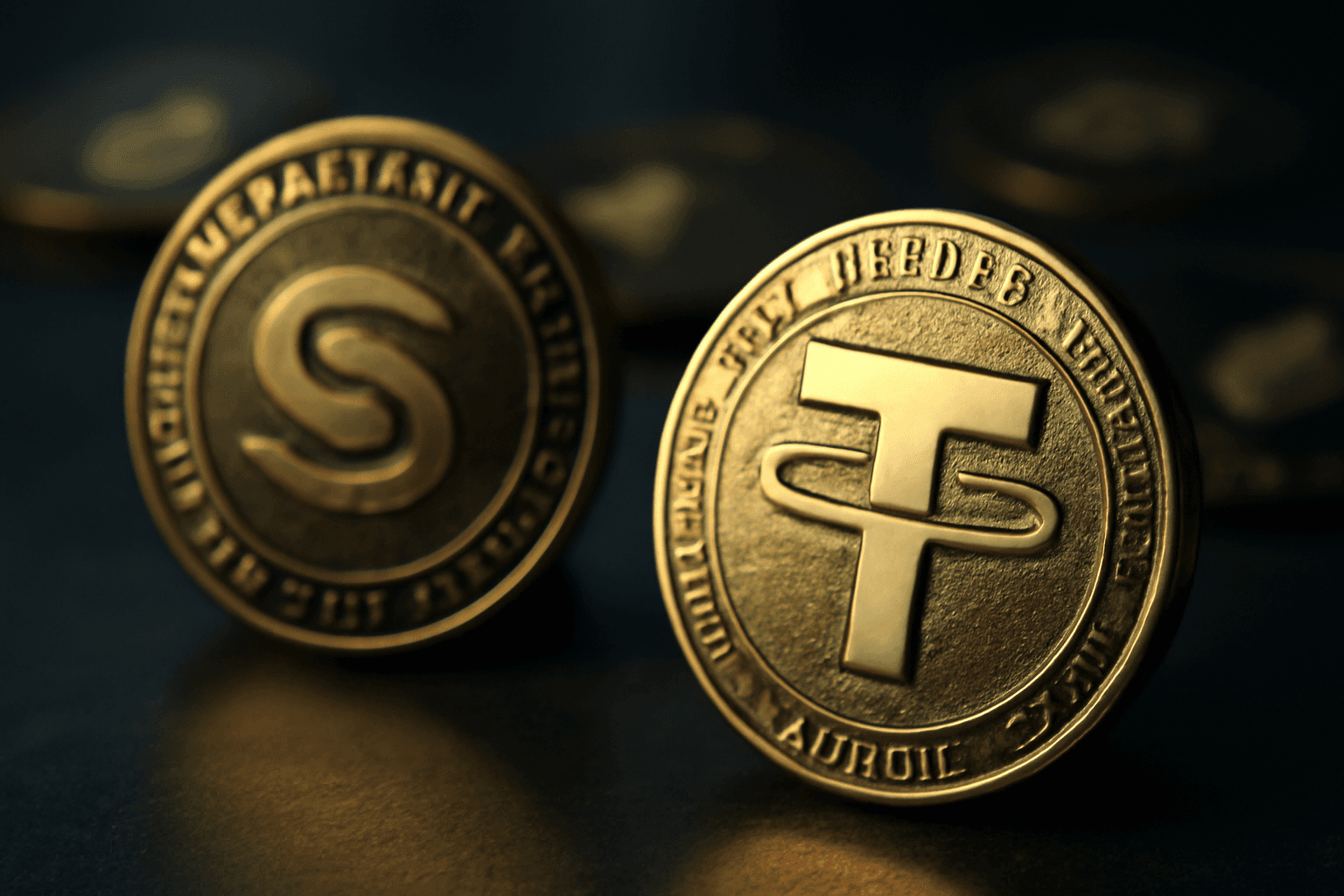
StableChain has launched a Layer 1 blockchain where all transactions, fees, and yields operate exclusively in USDT, Tether’s digital dollar, leaving its native token, STABLE, completely out of users’ daily interactions. On this network, gas fees are paid directly in USDT0, transfers settle solely in USDT, and simple transfers carry no fees at all. The design makes the STABLE token invisible to users for payments, challenging traditional token utility models.
The role of STABLE token
Unlike many blockchain tokens that serve as both fuel and stake, STABLE’s purpose is sharply defined: it provides governance rights and network security. Token holders participate in protocol decisions through the Stable Foundation’s governance framework. also validators must stake STABLE tokens to secure the network and receive rewards, making security demand the primary driver of the token’s value.
This separation of payment asset and security token reflects a clear architectural choice. The network chooses a stable, predictable fee asset in USDT while isolating security and governance functions within STABLE. This dual-token approach poses a fundamental question for the crypto space: can a token disconnected from transactional usage still capture value through governance and staking incentives alone?
The STABLE token’s market price implies investor belief in a future upside, possibly tied to rights on USDT-denominated fee flows, although those are not yet realized. This contrasts with other blockchains where the native token is integral to every transaction and bond on the network, such as Ethereum, where ETH acts as both fuel and security stake.
StableChain’s architecture essentially tests whether infrastructure value can translate into token value when user experience bypasses the native token entirely. This concept has been explored before across Ethereum, XRP, and various Layer 2 solutions, but StableChain makes the distinction explicit by design.
Users can onboard, build, and transact on StableChain without ever interacting with STABLE. The network aims to offer a dollar-denominated experience for payments and yields, an appealing proposition for businesses and developers seeking fee stability and predictability.
This model also raises questions about the future economics of the network and how STABLE holders might benefit if the chain’s USDT fee flows grow significantly. That potential is the wild card behind the token’s current market valuation and governance interest.