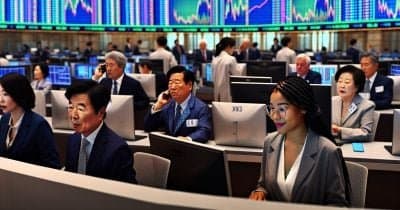
South Korea's KOSPI index has shaken investors with its wild swings this year, reaching an annualized volatility over 60%, outpacing even Bitcoin's famed rollercoaster rides. This surge in price fluctuations puts it well above Japan’s Nikkei, doubling its volatility and raising alarms across financial circles.
On July 16, 2026, the KOSPI plunged 6.37%, a day that marked a 25% drop from its June peak and pushed the index into a technical bear market. President Lee Jae Myung acknowledged the market’s fragility amid these drastic moves. The dramatic swings largely stem from the outsized influence of Samsung Electronics and SK Hynix. Together these two semiconductor giants account for more than half of the KOSPI's index weight. This concentration means that any sentiment shifts related to AI chip demand ripple through the entire South Korean market, amplifying volatility.
Regulators stepped up, unveiling new rules on July 29-30 to rein in frenetic trading. These include limits on individual holdings in leveraged ETFs tied to single stocks and increased transaction fees. Such measures aim to curb speculative trading, but could also tighten liquidity, potentially fueling further price turbulence under stress.
Meanwhile, US Treasury markets told a calmer story. Ten-year bond yields fluctuated narrowly between 4.65% and 4.73%, highlighting a stark contrast to the KOSPI’s chaos. The two markets have remained relatively uncorrelated in day-to-day moves, underscoring differing investor behaviors across global asset classes.
For anyone holding Asian or Korean equities, these regulatory shifts and extreme swings bear close watching. Short-term trading may slow, but whether this stabilizes prices or just limits market depth is still uncertain.
This content is for informational purposes and does not constitute financial advice.