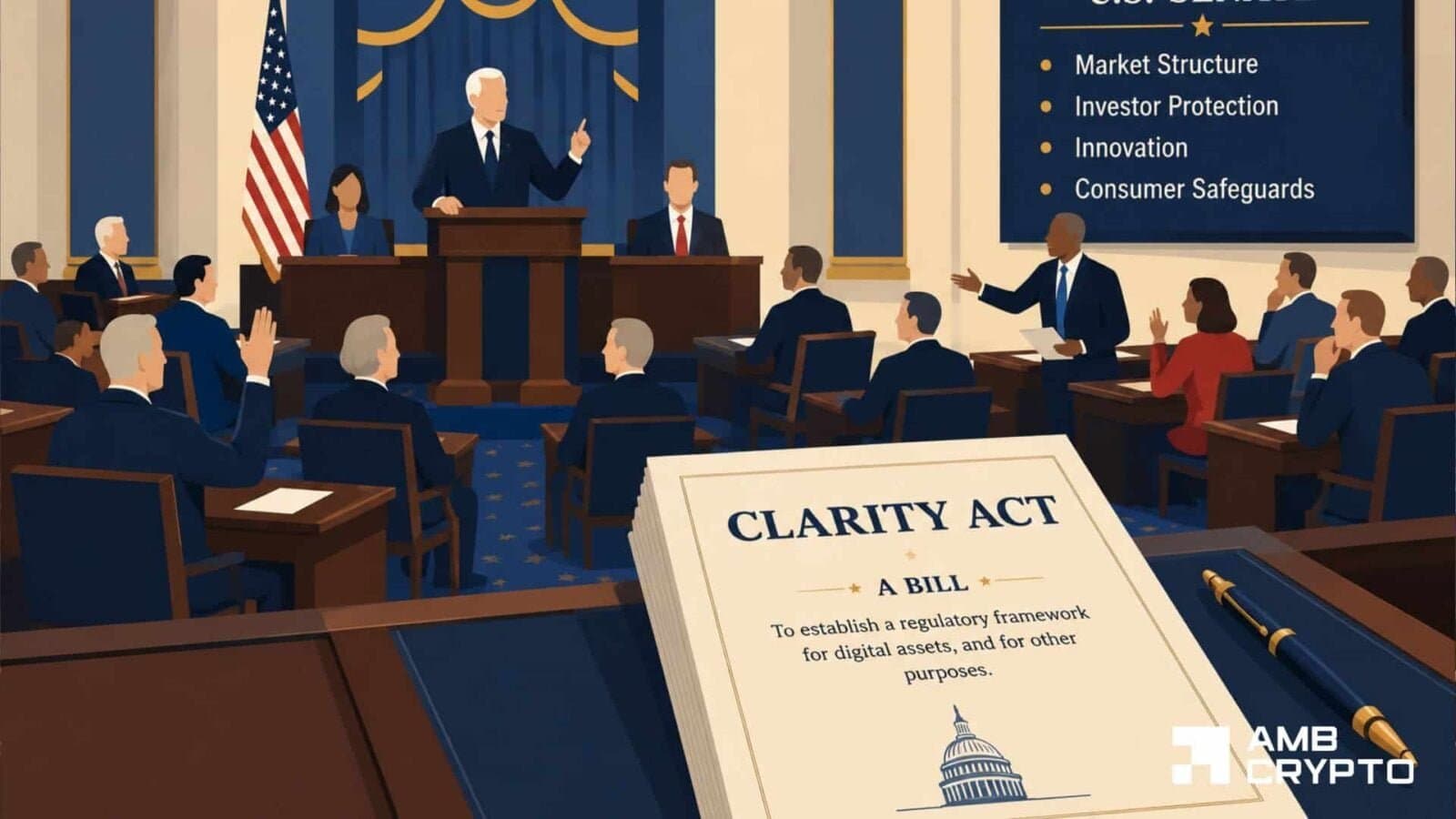
The Senate is running out of time to pass the CLARITY Act before the August recess as lawmakers juggle several pressing legislative priorities. On July 28, the focus shifts to Jay Clayton’s confirmation and the cloture vote for the Russia sanctions bill, pushing the crypto market framework legislation to the backburner.
Majority Leader John Thune plans to move those key measures first, limiting floor time for the digital asset bill. The Senate typically advances just one contentious issue at a time, which compresses the window for debating the CLARITY Act. Despite the tight schedule, the bill has momentum it already cleared the House and the Senate Banking Committee and is aiming for a floor vote in the week starting August 3.
What’s inside the CLARITY Act?
The latest draft merges rival crypto regulatory proposals into a unified text, marking a shift from negotiation to concrete policy design. This version delineates responsibilities between the SEC and CFTC, standardizes disclosure and certification requirements for token issuers, and introduces a streamlined fundraising exemption for qualifying projects. It also adds new ethics rules to bolster bipartisan support.
Crucially, the framework balances investor protections with fostering innovation, giving market participants clearer expectations on how digital assets will be governed federally. Still, any delay pushing back the 180-day implementation period could stretch regulatory uncertainty, affecting exchanges, issuers, and institutional investors eager for clarity.
The battle now centers on how to implement these rules without undermining existing state enforcement powers. Supporters want swift Senate action, but critics warn that weakening state roles could leave gaps. With the clock ticking, the CLARITY Act’s fate hinges on whether lawmakers can carve out time amid a crowded agenda.
This content is for informational purposes and does not constitute financial advice.