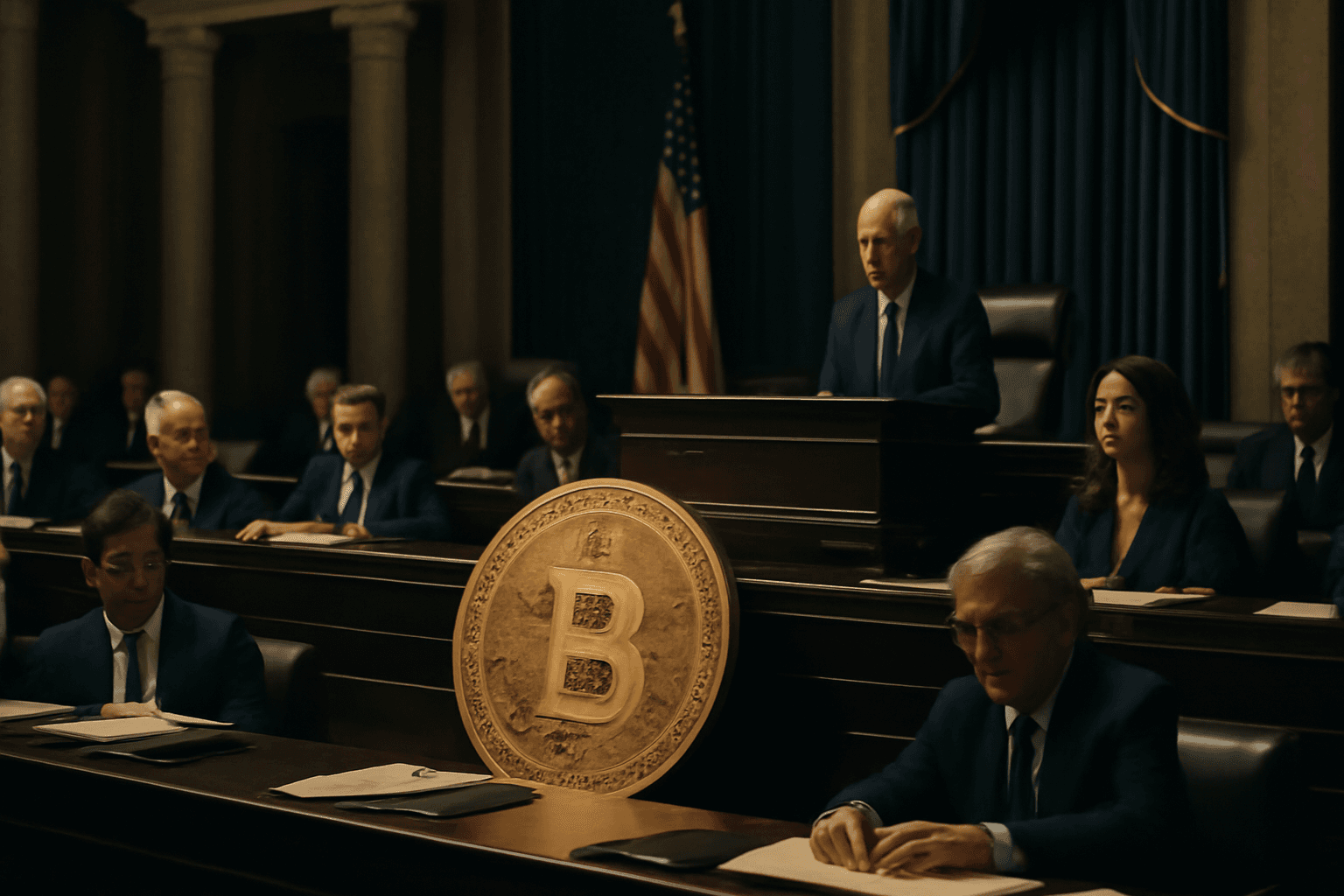
The Senate has just two weeks before its August recess to pass the CLARITY Act, a bill designed to provide a clear regulatory framework for digital asset markets in the U.S. The clock is ticking as bipartisan negotiations continue, but an ethics dispute threatens to stall progress.
Grayscale Investments recently highlighted the shrinking window for the bill's approval. Zach Pandl, head of research at Grayscale, warned that without Senate clearance before the recess, the CLARITY Act risks being sidelined by the intensifying midterm election politics. This urgency is echoed by key stakeholders such as Coinbase, whose CEO Brian Armstrong has called for a swift Senate vote.
Senator Cynthia Lummis (R-WY), chair of the Senate Banking Subcommittee on Digital Assets, unveiled an updated version of the legislation on July 22. This revision merges proposals from both the Senate Banking and Agriculture committees, aiming to clarify jurisdiction between the SEC and the CFTC over digital assets. Supporters argue that establishing well-defined oversight, registration standards, and customer protections will bring more stability than relying on enforcement actions or agency guidance alone.
However, a major hurdle remains: ethical restrictions on public officials’ involvement with digital assets. Republican lawmakers want limits on officials who issue or sponsor crypto projects while in office, but Democrats push for stricter enforcement and conflict-of-interest rules, especially covering officials' family members. Several Senate Democrats have voiced concerns that the current draft does not adequately address these issues, withholding their support until stronger safeguards are included.
Despite the standoff over ethics, there is broad agreement on other parts of the bill. These include protections for noncustodial software developers, rules for safeguarding customer assets, and enhanced measures to combat money laundering and illicit finance.
The Senate’s August recess acts as a hard deadline for lawmakers to reconcile these differences. Failure to pass the CLARITY Act now means extended regulatory uncertainty for crypto businesses, developers, and investors, complicating planning and compliance efforts in an already volatile market.