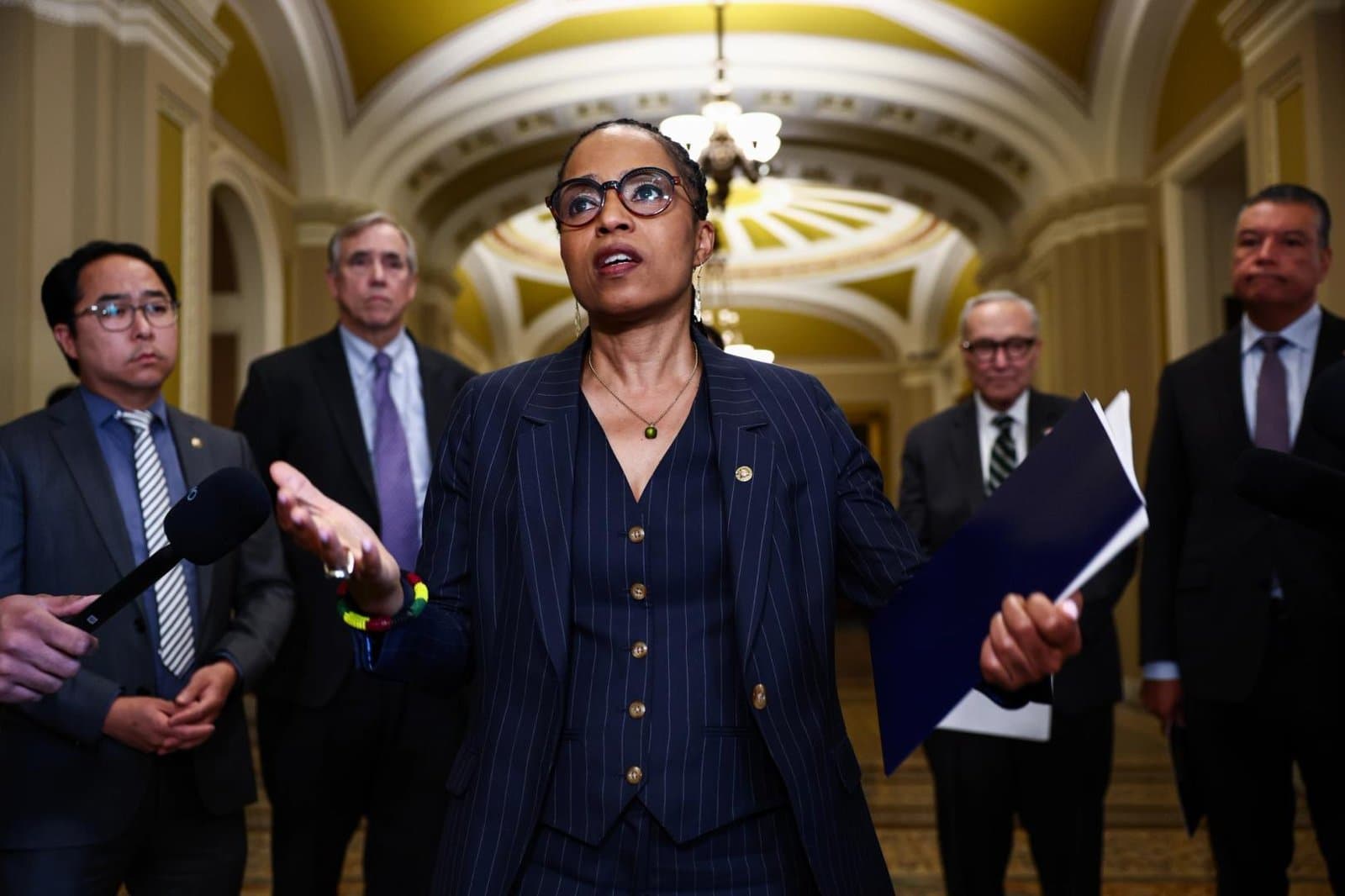
Seven Senate Democrats told Republicans on Wednesday that their latest draft of the Digital Asset Market Clarity Act still isn't good enough, putting fresh pressure on a bill that needs bipartisan votes to move. The group, which includes several of the lawmakers most critical to getting the legislation across the line, released a joint statement shared with CoinDesk calling the current text inadequate on multiple fronts.
Senators Angela Alsobrooks, Cory Booker, Catherine Cortez Masto, Ruben Gallego, John Hickenlooper, Mark Warner and Raphael Warnock said the Republican-proposed text 'falls short' on ethics for elected officials, consumer protection, illicit finance, conflicts of interest and market integrity. 'Key provisions including those addressing ethics for elected officials, consumer protection, illicit finance, conflicts of interest and market integrity must be strengthened,' the statement read. Alsobrooks and Gallego had been the only two from that group to vote for the Clarity Act in committee, making their continued engagement significant to its prospects.
Ethics Provision at the Center of the Dispute
Senate Republicans published the new Clarity Act draft earlier the same day, including an ethics provision that the White House and President Donald Trump had agreed to. Senator Bernie Moreno, one of the lead Republican negotiators, called it 'the most powerful ethics language in U.S. history' in a post on X, adding: 'Don't listen to the DC Democrat lies.' The ethics question has shadowed crypto legislation for more than a year, going back to the Senate debate over the stablecoin-focused GENIUS Act. It gained sharper urgency in recent weeks after Trump's latest financial disclosure revealed he made over $1.4 billion from his crypto ventures in 2025.
The math of passage is tight. The bill needs 60 votes to advance in the Senate, which means Republicans may have to bring as many as 10 Democrats on board. The seven lawmakers on Wednesday's statement represent the core of that potential coalition. All seven said they would continue negotiating with Republican counterparts, though none signaled imminent support for the current text.
The Senate calendar adds another layer of pressure. The chamber is scheduled to leave for its summer recess after August 7, and Republican Majority Leader John Thune's office confirmed to CoinDesk that he still plans to move the bill forward in the coming days. That leaves a narrow window before the legislative calendar effectively closes for the summer, with other priorities also competing for floor time.
This article is for informational purposes only and does not constitute financial or investment advice.