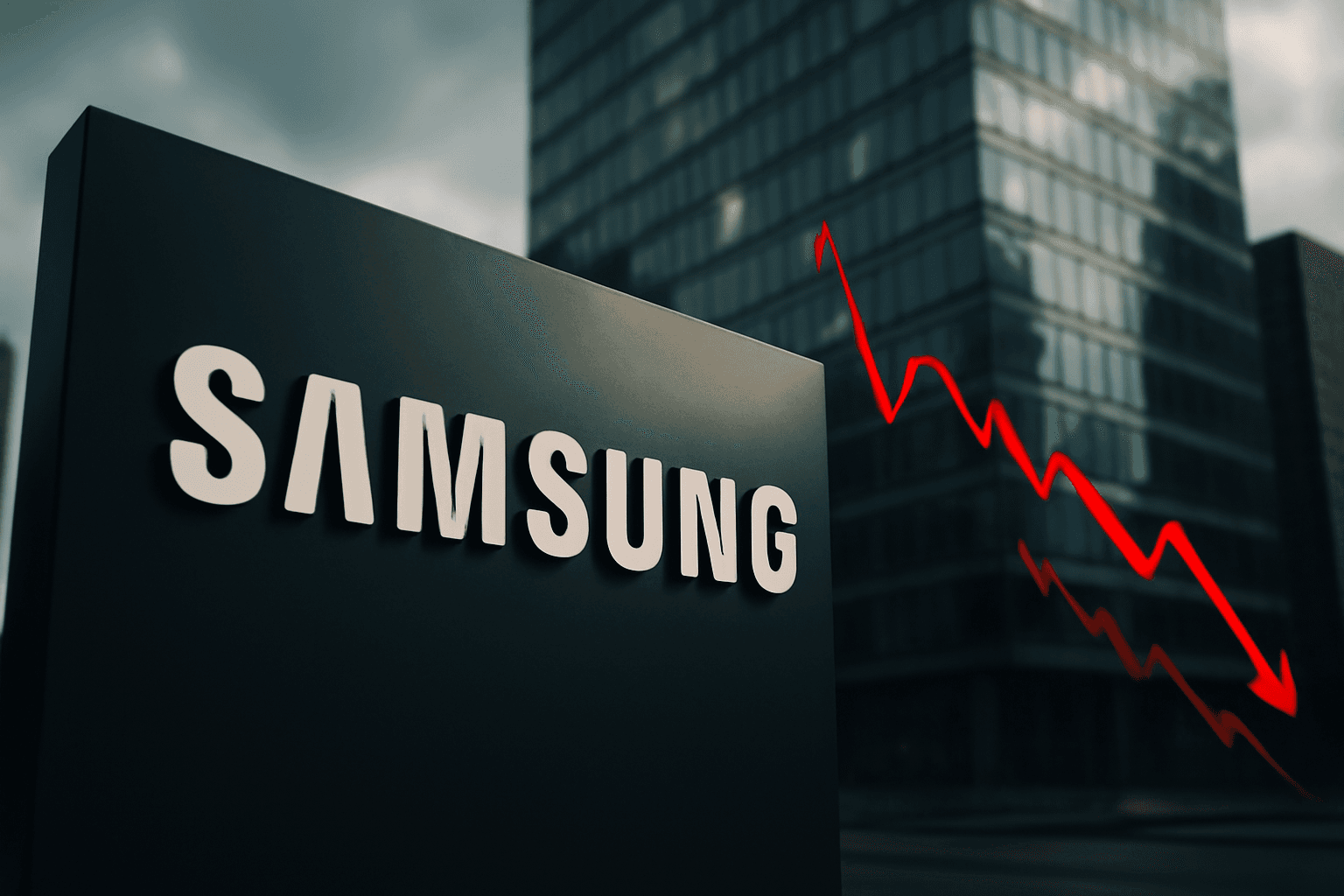
Samsung shattered its own financial benchmarks in Q2, posting a staggering operating profit of 89.5 trillion won, or $61.3 billion. Yet investors panicked, driving its shares down 13.4 percent on July 28. SK Hynix followed with a 14.7 percent drop, wiping out almost 400 trillion won in market value and dragging South Korea’s KOSPI index down 10.8 percent the worst single-day slump since March 2026.
The star performer behind these record figures was Samsung’s Device Solutions unit, which raked in 127.5 trillion won in revenue and 89.2 trillion won in operating profit. The Memory Business soared, delivering a 62 percent revenue jump from the previous quarter and a jaw-dropping 471 percent increase year-over-year. This surge is closely tied to booming demand for high-bandwidth memory, driven by AI applications. Samsung has already shipped samples of its lightning-fast HBM4E memory and expects HBM sales to triple in Q3, with over 60 percent of its memory revenue coming from HBM products in the second half of 2026.
Market nerves overshadow stellar numbers
Despite these solid results, market anxiety over the AI investment cycle sent shares tumbling. Analysts cite worries about whether the massive capital spending by hyperscalers can continue without disruption, especially with growing competition from Chinese chip equipment makers. Meta’s second-quarter report highlighted the strain, showing a striking 93.7 percent plunge in free cash flow due to ballooning capital expenditures. Microsoft, however, is still projecting aggressive spending of around $175 billion for fiscal 2027, showing a split picture on the demand front.
These developments shows an uneven landscape for AI infrastructure funding, which is rattling chipmakers like Samsung even as their technology powers the sector’s expansion.
This article is for informational purposes and does not constitute financial advice.