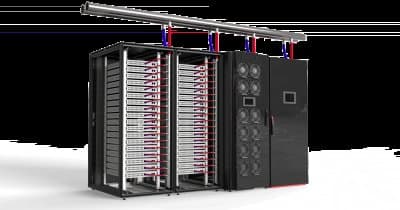
"The heat generated by next-gen AI chips surpasses what air cooling can handle," says a data center engineer familiar with the shift. nVent Electric is doubling down on liquid cooling, opening a massive 117,000-square-foot plant in Blaine, Minnesota, to ramp up production. This new facility, operational since early 2026, marks a key step as AI hardware heats up beyond air’s limits.
NVIDIA’s latest Blackwell GPUs produce enormous heat loads, making traditional air cooling obsolete. Liquid cooling moves heat away with an efficiency reportedly 3,500 times greater than air, letting data centers cram more performance into tighter spaces without risking thermal shutdowns. This capability is driving a surge in liquid cooling adoption, expected to grow from about 10% market penetration in 2024 to over 20% by next year.
The financial stakes are huge. The global liquid cooling market for data centers will jump from $4 billion in 2026 to nearly $28 billion by 2033, expanding at a blistering 31.5% annual growth rate. nVent, with 15 years of experience and over 2 gigawatts of installed capacity worldwide, is well positioned to capitalize. Their portfolio includes coolant distribution units and rear-door heat exchangers tailored for dense AI workloads. Partnerships like the June 2026 collaboration with Siemens for NVIDIA AI data centers underline their strategic role in this transition.
Interestingly, the cooling challenges uniting AI data centers and Bitcoin mining are converging. Companies like Core Scientific and Hut 8 are shifting toward AI hosting, facing the same thermal bottlenecks since both applications pack massive compute power into limited space. Efficient liquid cooling is the difference between profitable uptime and costly downtime for these operators.
This material is for informational purposes and does not constitute financial advice.