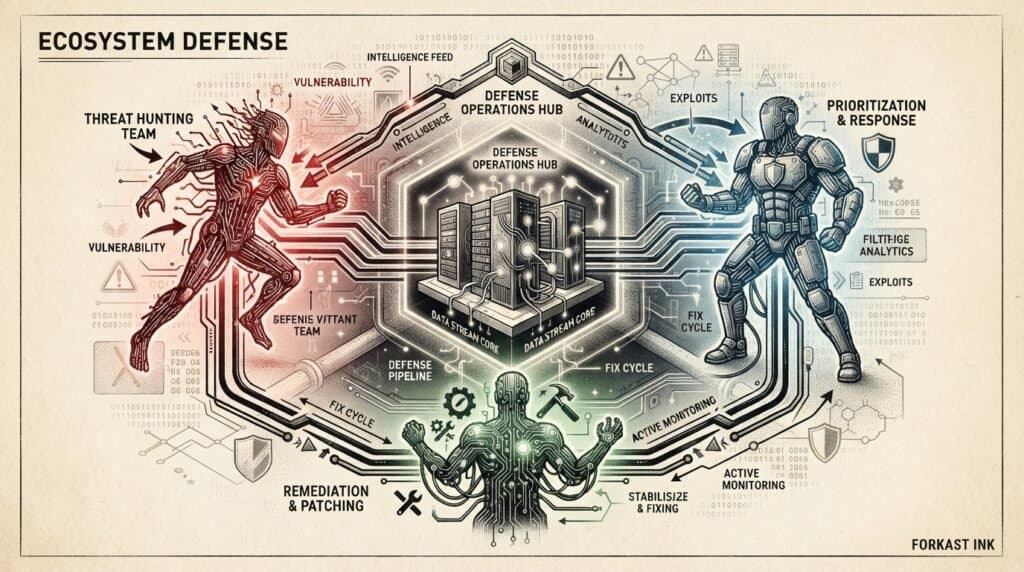
On July 27, Microsoft announced Project Perception, a cutting-edge platform that combines multiple AI models for enhanced cybersecurity. The platform will be available to the public starting August 3.
Project Perception uses an intelligent routing system to assign cybersecurity tasks such as vulnerability detection, threat analysis, and remediation to the most suitable AI model. This orchestration includes Microsoft’s own MAI-Cyber-1-Flash model, alongside AI from OpenAI and Anthropic.
Microsoft’s earlier MDASH system laid the groundwork for this innovation. In May 2026, MDASH scored 88.45% on the CyberGym benchmark, outperforming Anthropic’s Mythos at 83.1% and OpenAI’s GPT-5.5 at 81.8%. This shows a notable lead in AI cybersecurity capabilities.
The company positions Project Perception as a cost-effective alternative to single-model systems by optimizing compute resources through dynamic task allocation. This could lower expenses for businesses adopting AI-driven security tools.
This launch places Microsoft in direct competition with Anthropic’s Project Glasswing and OpenAI’s Trusted Access for Cyber programs. Anthropic has been enhancing its cybersecurity offerings with specialized vulnerability detection models, while OpenAI has tightened access controls, causing some friction among security researchers.
For enterprises, this competition could translate into more affordable and advanced security solutions. If Project Perception delivers on its promise, it might speed up the adoption of AI in cybersecurity across various industries.