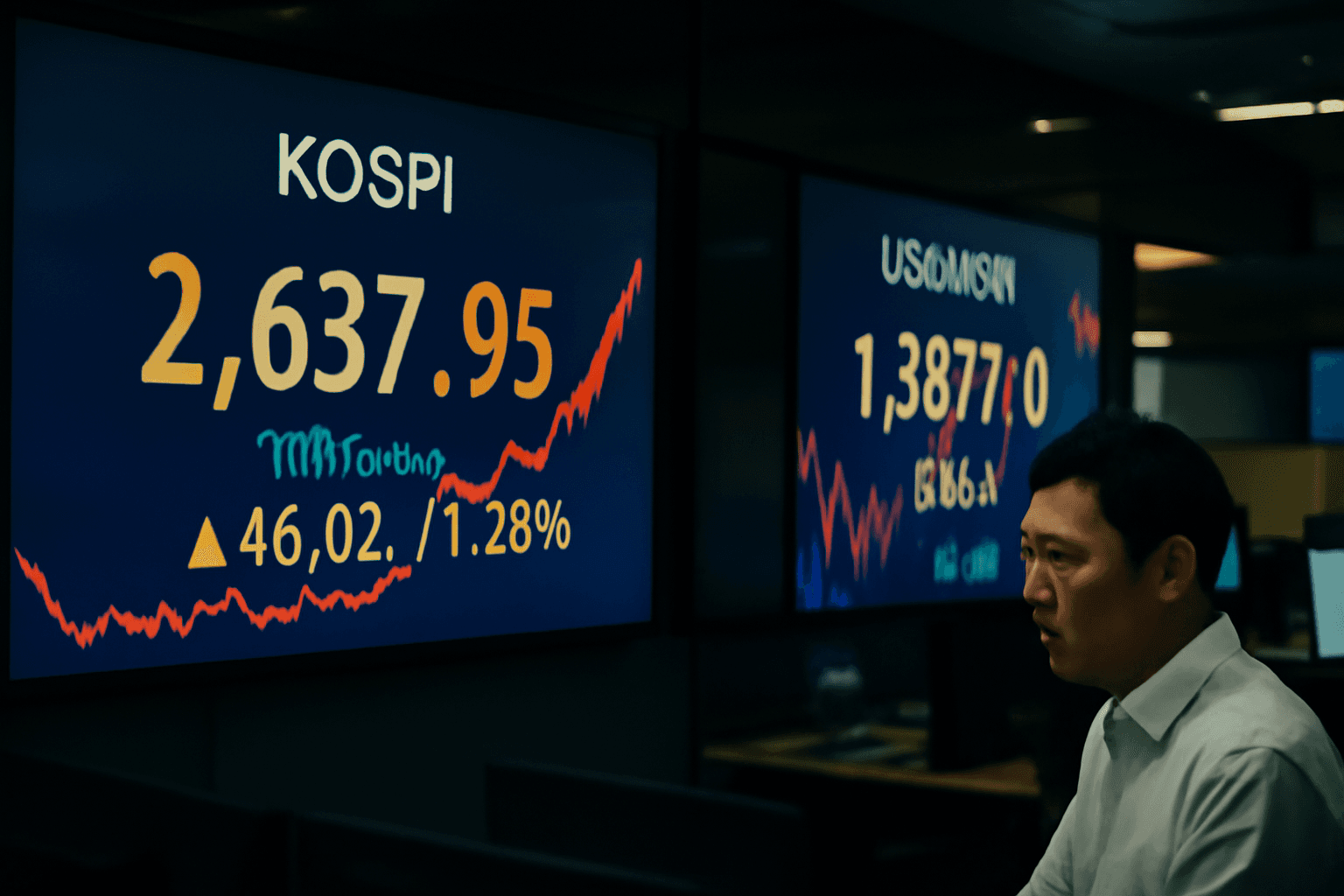
The Korea Exchange stepped in on June 25, 2026, to pause buy-side program trading on the KOSPI index for five minutes. This halt came shortly after the index soared more than 5% during a chip-driven rally at market open.
The move targeted automated basket orders that had been flooding the market on the bid side, amplifying the surge. Unlike a full market-wide circuit breaker, this was a targeted program trading suspension known as a buy-side sidecar, designed to stabilize trading without freezing all activity.
How the Sidecar Mechanism Works
Program trading involves large algorithm-driven orders that execute across multiple stocks simultaneously. When many such trades push prices sharply in one direction, volatility can spike rapidly. The buy-side sidecar temporarily stops just the bid-side program trades, allowing order books to rebalance and cooling off excessive enthusiasm.
According to the Korea Exchange's rules, the sidecar kicks in after the KOSPI 200 futures climb 5% or more for at least a minute post 09:05 local time. On this occasion, the index had jumped to 8,902.97 points, a gain of 431.95 points (5.1%) by 9:09 a.m., driven by concentrated buying in AI semiconductor stocks like Samsung Electronics and SK Hynix.
This intervention isn't new. The Korea Exchange has previously used its sidecar tool during recent volatile episodes to keep markets orderly. The program trading suspension helps prevent runaway price moves while allowing investors to digest sharp shifts.