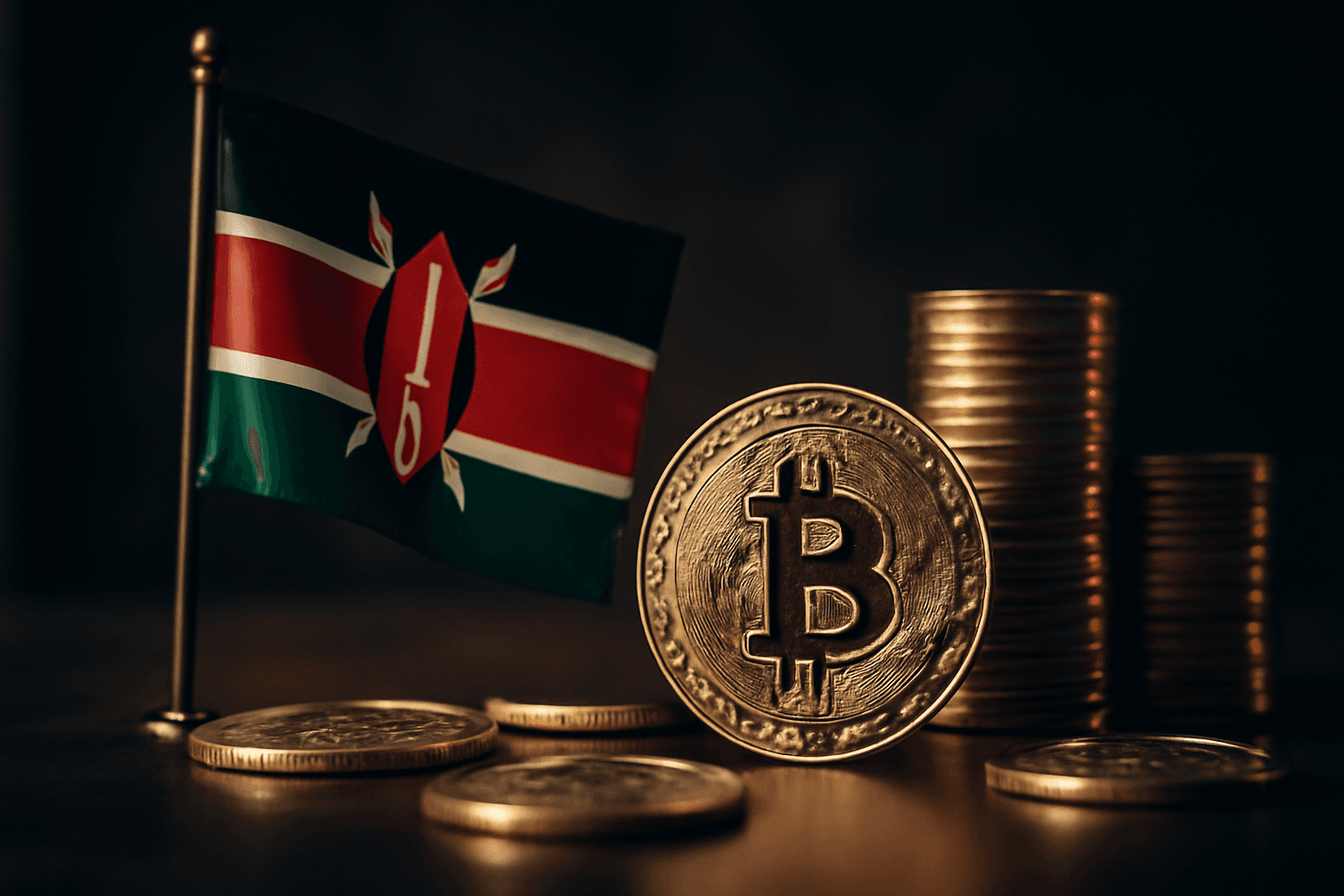
Kenya’s National Treasury has slashed the minimum paid-up capital requirement for stablecoin issuers by 40%, bringing it down to about $2.32 million. This move aims to lower the barriers for global stablecoin providers considering entry into the country's expanding crypto ecosystem.
Previously, the draft rules had set the bar near $3.9 million, a figure that many industry players felt was too steep for new entrants. By easing the capital threshold, Kenya signals its intent to attract more players amid surging local demand. The country ranked fifth globally in crypto adoption last year according to Bybit’s 2025 World Crypto Ranking, proof of the fast pace of digital asset use in the region. Stablecoins, in particular, have found traction as a tool for cross-border payments and as a safeguard against local currency volatility.
Strong Oversight and Reserve Requirements Stay in Place
Despite the capital reduction, Kenya maintains stringent rules to protect investors. The Central Bank of Kenya now holds broad powers to oversee stablecoin issuers and virtual asset service providers. This includes the ability to restrict offshore-issued tokens by directing local platforms to cease offering them. also regulatory mandates require stablecoin issuers to back their tokens 1-to-1 with reserves and facilitate redemptions within two days.
Reserves must be split, with at least 30% held in segregated trust accounts at Kenyan commercial banks and the balance invested in approved domestic assets. Importantly, the reserves must be held in the same fiat currency to match the stablecoin’s peg. Parliament’s Committee on Delegated Legislation unsuccessfully sought to ease local investment rules, which could have made licensing less attractive for foreign firms. Retaining these provisions is expected to funnel more deposits into Kenyan banks if international stablecoin issuers enter the market.
Other financial requirements differentiate between stablecoin issuers and wallet providers. While both pay a $772 application fee, issuers must hold $2.32 million in paid-up capital versus $1.16 million for wallet operators and pay a licensing fee roughly four times higher. Issuers also need to maintain liquid capital of at least $463,320 or 100% of current liabilities, a strict standard that wallet providers meet at half that level.
The regulations ban interest or reward schemes linked to stablecoin holding periods, effectively cutting off yield-like incentives. Issuers will compete on transparency and trust instead of offering bonuses or loyalty rewards.
This regulatory environment balances Kenya’s aggressive push to grow its crypto market with protective measures designed to shield investors from potential risks. Lower capital requirements could encourage new entrants, but the Central Bank’s expansive oversight signals that Kenya intends to keep a tight grip on the sector’s development.
This content is for informational purposes only and does not constitute financial advice.