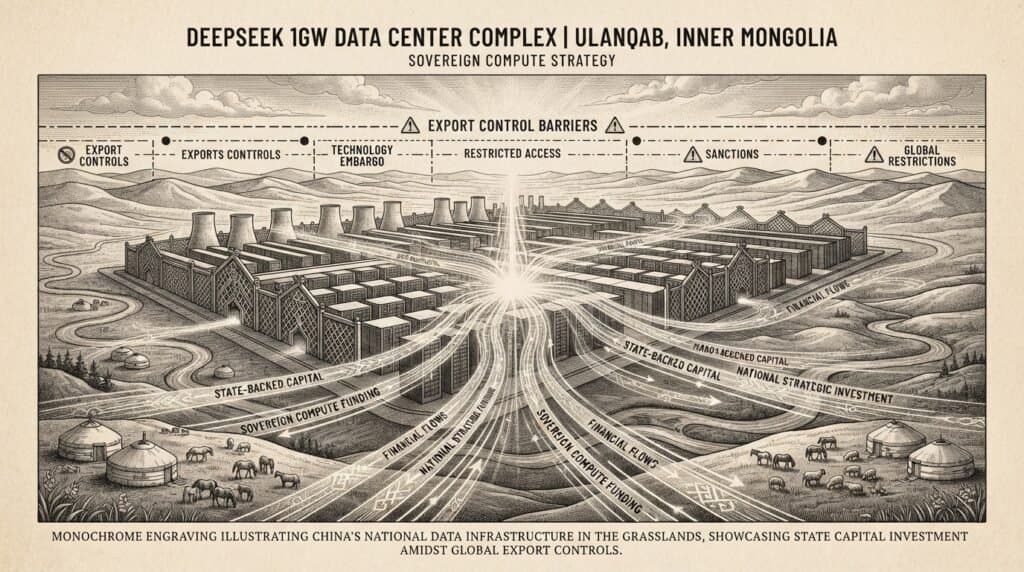
DeepSeek’s plan to build a colossal 1GW data center in Ulanqab, Inner Mongolia, signals China’s serious move from policy talk to hard infrastructure in the race for sovereign computing power. Set to begin partial operations by late 2027, this facility shows the growing importance China places on sheer physical scale in shaping the US-China tech rivalry.
Ulanqab’s Growing Role in National Compute Strategy
With fewer than 2 million residents, Ulanqab is transforming into a major hub under the government’s ‘East Data, West Compute’ initiative aimed at shifting compute-intensive tasks from coastal cities to the energy-rich west. Already home to nearly 90 data centers from giants like Apple, Alibaba, and Huawei, DeepSeek’s investment aligns perfectly with this push. The company will both self-build and lease parts of the facility, showing strong confidence in the region’s strategic importance.
Financial Muscle and Export Control Tensions
DeepSeek’s massive project isn’t just ambitious in scale but also backed by substantial capital. The firm raised around $7.4 billion in mid-2026, the largest private AI funding round in China, partly involving discussions with a state-backed semiconductor fund. While the $50 billion figure often cited for a 1GW center provides context, DeepSeek’s exact costs remain undisclosed. This buildout unfolds amid US allegations that DeepSeek improperly sourced Nvidia Blackwell chips, which are restricted for sale to China. Despite denials and Nvidia’s statements about lacking smuggling evidence, the firm faces scrutiny from US lawmakers accusing it of circumventing export controls. These tensions highlight the complexity of building sovereign compute capacity amid geopolitical friction.
This material is for informational purposes and does not constitute financial advice.