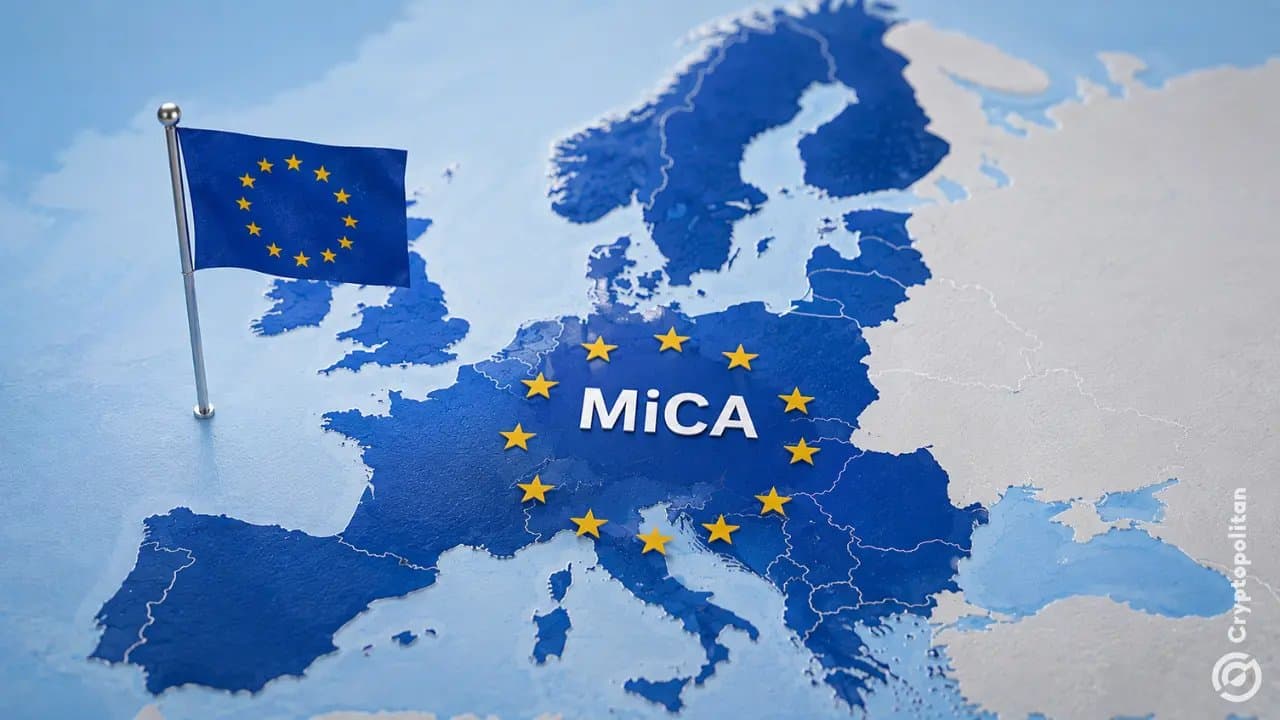
Stablecoin giant Tether abandoned the European market after refusing to comply with the EU’s new stablecoin rules under MiCA. Now, Circle’s top EU policy executive suggests a regulatory fix called equivalence that might allow Tether to return without creating a separate EU version of its coin.
Equivalence Could Simplify EU Market Access
The EU’s Markets in Crypto-Assets (MiCA) regulation, finalized on July 1, requires stablecoin issuers to set up licensed entities within the bloc or face exclusion. This has pushed nearly all major stablecoins, about 99% of the market according to Circle’s Patrick Hansen, outside Europe since they operate under non-EU rules.
Equivalence would let the EU recognize the existing home jurisdiction rules that a stablecoin issuer follows, rather than forcing them to create a new, EU-specific token. This approach is already used in sectors like banking and insurance but has not been applied to crypto yet. It could dramatically reduce the burden for global stablecoin operators wanting EU access.
What This Means for Tether and Its Rivals
Tether’s market cap currently stands near $184 billion, making it the largest stablecoin worldwide. But MiCA demands that at least 60% of reserves be held in banks, whereas Tether keeps most assets in US Treasury debt. This difference led Tether to pull USDT from European exchanges.
If equivalence were adopted, the EU could accept Tether’s current regulatory framework, potentially allowing USDT to return without launching a separate European version. The main challenge is Tether’s current jurisdiction: it is based in El Salvador and hasn’t complied with US stablecoin laws, which complicates any swift EU comeback.
Circle’s own USD Coin (USDC) took a different route, obtaining a French license in 2024 and maintaining its EU presence. Equivalence would mainly benefit competitors like Tether, rather than Circle itself.
This regulatory change would require amending MiCA, possibly during the EU’s review process starting May 2026. The political landscape remains cautious, with the EU focused on protecting its financial ecosystem amid the rise of US dollar-backed stablecoins and the European Central Bank’s digital euro experiments.
This article is informational and does not constitute financial advice.