Prime Trading walked into Marex's Chicago office and posted USDC instead of dollars. July 16, Marex announced it would accept Circle's stablecoin as initial-margin collateral for CFTC-regulated cleared derivatives. Now it's real. The workflow ran end to end, from a customer handing over stablecoin to an FCM converting it to cash and funding the position.
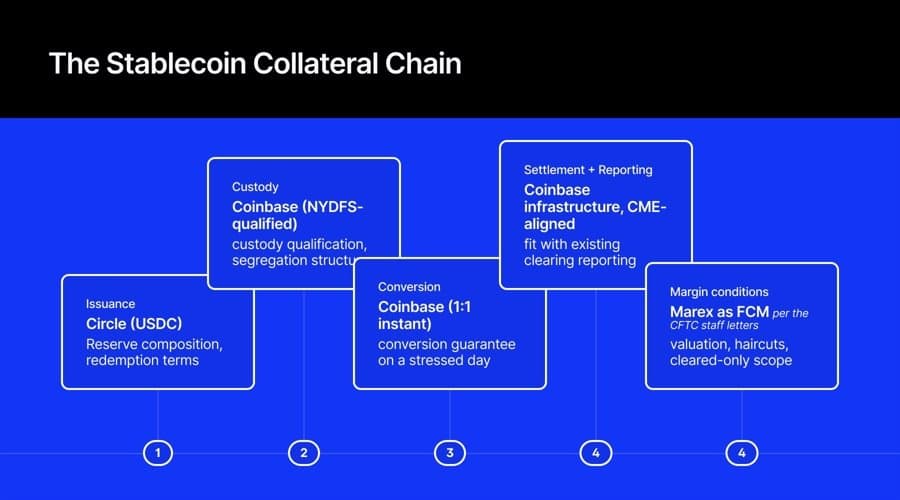
Three specific pieces had to click into place. Coinbase provides NYDFS-qualified custody, instant 1:1 fiat-to-USDC conversion, and reporting infrastructure that speaks CME's language. Marex didn't call it "stablecoin margin in general terms." It named custody, conversion, and compliance as the actual building blocks.
The transaction matters because it's the first time this happened inside US clearing. Not a test. Not a white paper. An actual prop firm posted actual collateral and it worked.
An FCM is the US clearing intermediary sitting between customers and the clearinghouse. It holds margin, guarantees trades, and lives under some of the strictest client-money rules in American finance. CFD brokers don't touch this plumbing directly, but what gets normalized in FCM margin today tends to surface in prime brokerage terms and client funding conversations a few quarters later. Regulators test collateral innovation at FCMs first.
Prime Trading's move signals something broader. Stablecoin collateral is moving from PowerPoints to production. Liz Martin, Coinbase's VP of Markets, said exactly that in the release. The infrastructure was already there, waiting for someone to use it. Now someone did.
The letter holding all this together is the CFTC regulation itself. Marex operates under CFTC oversight, Coinbase custody is NYDFS-qualified, and the reporting feeds into CME systems. Each piece has its own regulatory moat. That's what makes this different from a crypto exchange accepting crypto as collateral, which is just swapping one risk for another. Here, stablecoin moves through a federally regulated clearing system with custodians and reporting that the US financial establishment already knows how to audit.
This article is informational only and does not constitute financial advice. Always conduct your own research before making investment decisions.