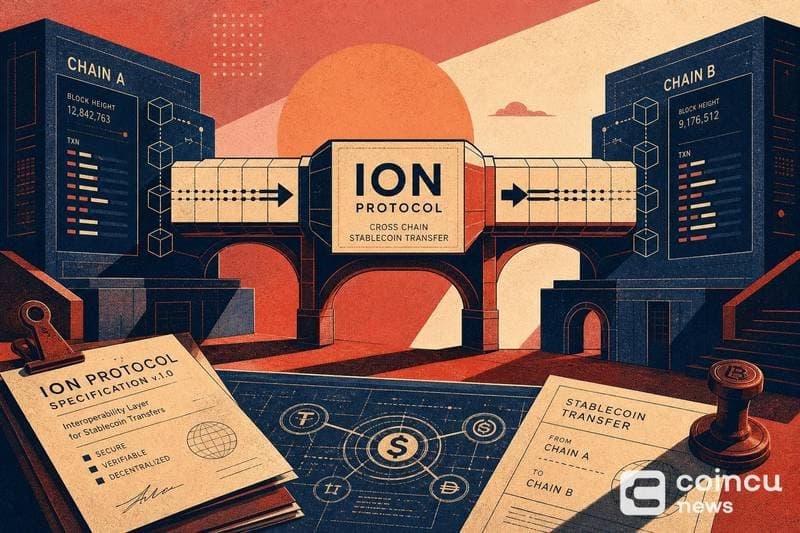
Brale has introduced ION Protocol, a new infrastructure designed to facilitate stablecoin transfers across multiple blockchains using a burn-and-mint mechanism. This approach eliminates the need for locked liquidity pools by destroying tokens on the original chain and minting equivalent tokens on the target chain.
How ION Protocol Shifts Stablecoin Supply
The core idea behind ION Protocol relies on a burn-and-mint model familiar within the crypto ecosystem, notably employed by Circle’s Cross-Chain Transfer Protocol for USDC. Instead of transferring tokens through bridge pools that lock assets, ION Protocol simply burns tokens on the source blockchain and mints the corresponding amount on the destination chain. This method ensures that the total supply remains constant but relocates smoothly between networks.
Positioning and Market Implications
Brale presents ION as an interoperability-focused infrastructure product rather than a new market token or trading vehicle. While detailed technical and adoption plans remain sparse, the launch signals a push toward more efficient cross-chain stablecoin mobility. This could enhance liquidity flow and usability across decentralized finance platforms. The protocol’s design may appeal to projects seeking to avoid the risks of locked pools, such as custodial vulnerabilities or liquidity bottlenecks.
As blockchain ecosystems continue evolving, solutions like ION Protocol play a critical role in bridging fragmented value. Brale’s move follows broader industry trends toward regulated blockchain networks and expanding derivatives markets, as seen in recent developments like European banks launching blockchain networks and HashKey’s expansion in Singapore derivatives. The burn-and-mint approach may reshape how stablecoins and other assets move across chains without compromising security or supply integrity.
This article provides information only and is not financial advice.