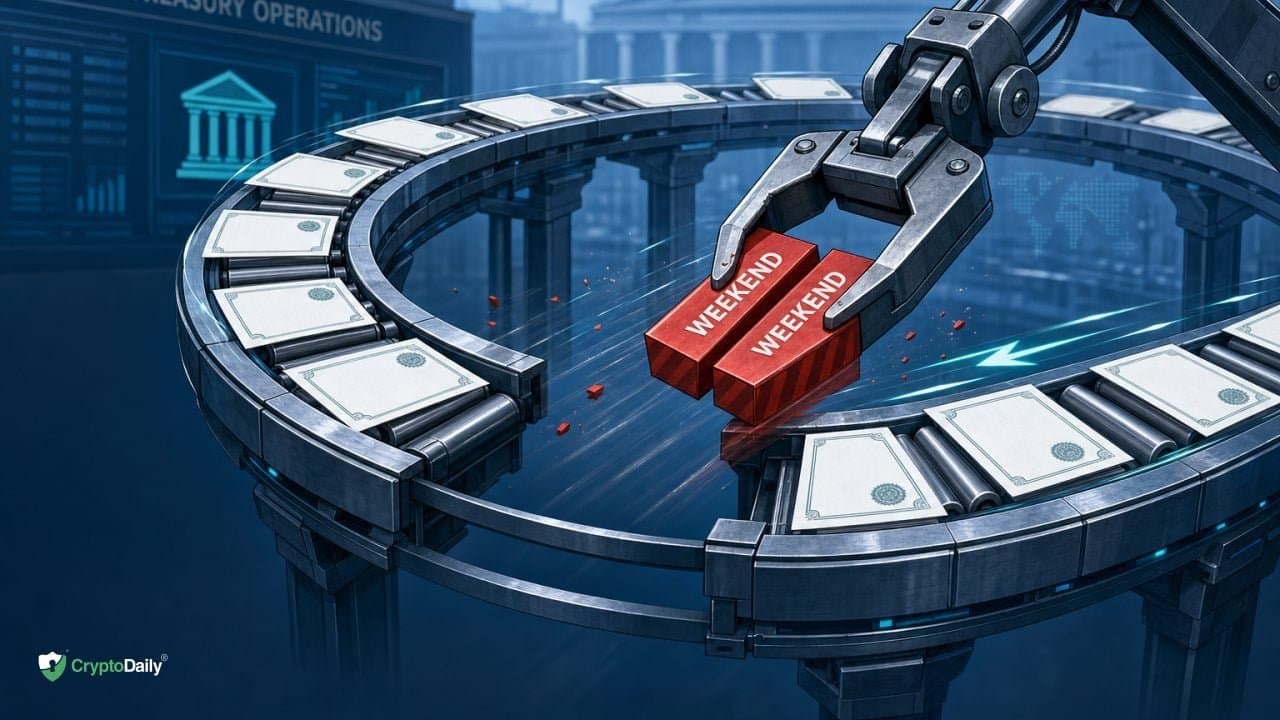
BNY Mellon began testing after-hours Treasury transactions this year, paving the way for a 24/7 settlement system set to launch in 2027. Their goal is to enable cash and bond movements at any hour, including nights and weekends, eliminating the old wait times tied to business hours.
Currently, Treasury trades can be executed nonstop, but settlements wait until banking hours, causing funding challenges and wider spreads. BNY's approach involves building an 'always-on' settlement infrastructure rather than flipping a simple switch.
Part of this effort includes pilots for tokenized Treasuries scheduled by late 2026, aiming to support both traditional and blockchain-based securities. BNY recently enhanced its digital custody services by enabling institutional-grade USDC, allowing clients to mint, burn, and transfer stablecoins directly within custody accounts.
Supporting this move, Tradeweb has already completed a real-time on-chain Treasury trade using tokenized cash on the Canton Network, involving players like Franklin Templeton and Virtu.
In June 2026, BNY rolled out 24/7 US dollar book transfers, granting clients weekend and holiday access to movement of funds within the bank’s ledgers. This step is key for dealers, market makers, and money market funds handling weekend collateral shifts and FX-hedged transactions.
Challenges remain, including integrating these processes with existing clearinghouses like FICC, addressing regulatory requirements, maintaining liquidity on weekends, and ensuring tokenized and conventional settlements can work smoothly together.
Today’s Treasury settlement depends on systems limited to weekdays. Trades can happen anytime, but the exchange of securities for cash is confined to business hours, forcing desks to juggle credit lines and repo deals to bridge the gap. BNY’s vision is to collapse this delay so that a note bought late Saturday evening settles immediately with finality.
This involves two paths: extending current securities ledgers and clearing mechanisms to work 24/7, and adopting tokenized Treasuries and cash on continuous ledgers allowing atomic settlement that finalizes both sides simultaneously.
BNY’s dual-path strategy signals a future where market participants can rely on faster, frictionless Treasury settlements, reducing operational strain and funding costs.