Bitcoin has bounced back more than 10% since its early July low. Institutional investors are returning, with spot ETFs pulling in nearly $1 billion over seven straight sessions. Yet, the question remains: has the bear market ended or is there more downside ahead?
Grayscale’s head of research, Zach Pandl, challenges the traditional four-year halving cycle that has long shaped Bitcoin price expectations. Instead, he points to broader macroeconomic forces like Federal Reserve policies and economic growth as the real drivers behind Bitcoin’s current moves.
The four-year cycle model forecasts another dip of up to 15%, possibly hitting a low in September or October 2026, some 15% below current levels. Bitcoin’s price has retraced from a low near $57,700 to around $65,000 now, still about 49% below its October 2025 peak above $126,000.
According to Pandl’s research, previous Bitcoin bear markets aligned with slowing economic growth and rising real interest rates the inflation-adjusted returns on bonds. This bear market intensified as markets priced in more Federal Reserve tightening and higher real borrowing costs.
If the Fed halts rate hikes while the economy remains stable, the current low might hold, marking a bottom. But if tightening continues, Bitcoin’s price could test lower support.
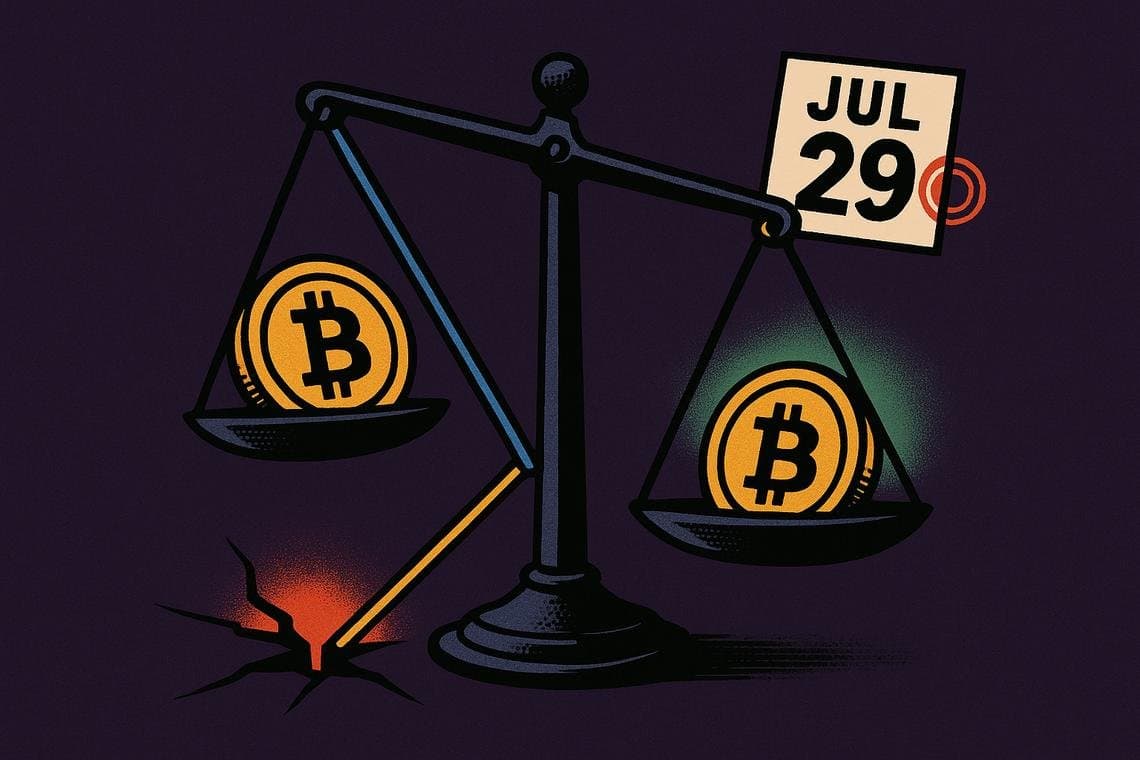
The upcoming Federal Reserve meeting on July 29 is the first major event on traders’ radar. Another critical date is August 7, when the Senate faces a deadline for the Clarity Act, both of which could significantly sway Bitcoin’s direction.
This evolving dynamic highlights how Bitcoin now behaves more like traditional assets such as gold and tech stocks, reacting to interest rates and economic indicators. The era when its price followed only its internal mining schedule may be fading.
Bitcoin’s recent price movements coincide with complex global factors, but the Federal Reserve remains the key player in determining whether the current rally is sustainable or a brief respite.