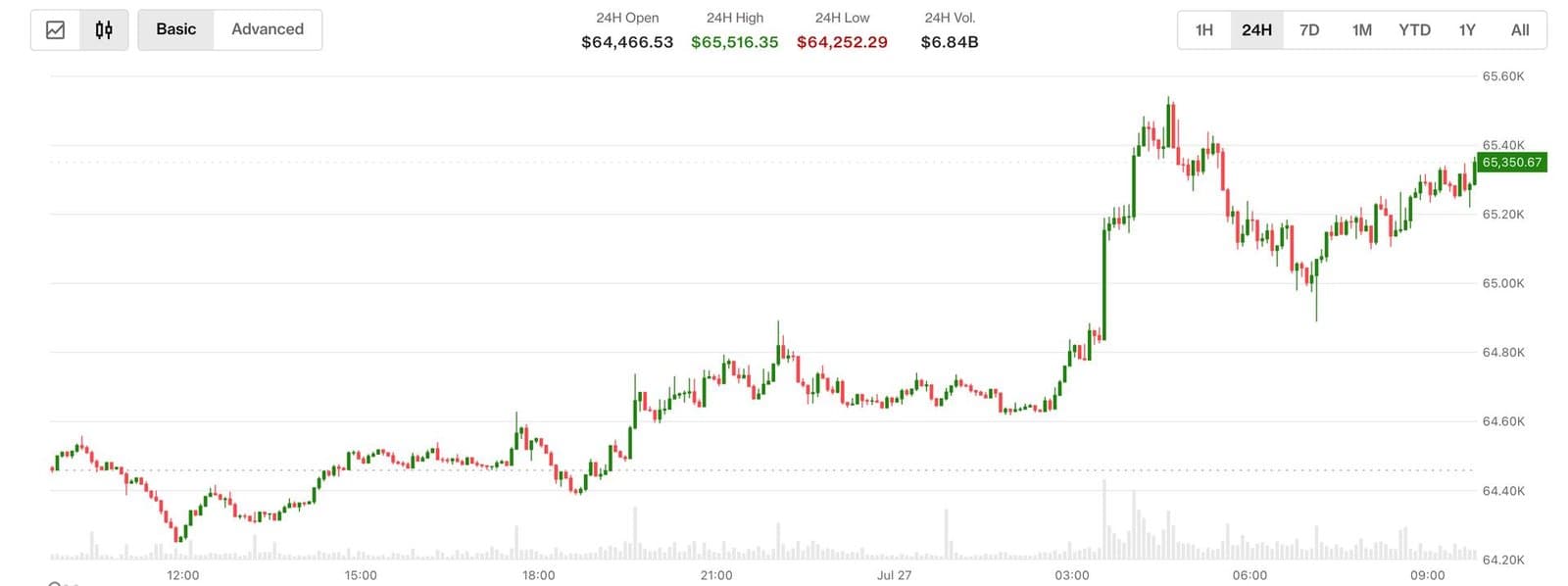
Bitcoin reclaimed the $65,000 mark, climbing roughly 1.2% within the last 24 hours as tensions between the U.S. and Iran eased. The temporary halt in military actions helped ease oil prices, which dropped around 5%, while Ethereum outperformed Bitcoin with a 3% gain, nearing $1,950.
Futures for West Texas Intermediate (WTI) crude oil fell sharply to about $85 per barrel, marking the largest decline since the conflict between the U.S. and Iran began. Meanwhile, stock market indices like the Nasdaq and S&P 500 saw modest gains of around 0.5%. Currency markets reflected growing risk appetite, with both the Australian dollar and euro strengthening against the U.S. dollar.
Iran has agreed to suspend airstrikes as long as the U.S. reciprocates, signaling the fragile start of renewed peace talks after the war reignited in late February following a brief ceasefire in the second quarter. This development has sparked optimism for diplomatic progress and has helped alleviate inflation concerns linked to energy prices, especially as Brent crude fell nearly 5% to $92.19.
Vikram Subburaj, CEO of the Giottus exchange in India, noted that this drop in oil prices is influencing broader market sentiment. He pointed out that despite Ethereum's outperformance and some gains across altcoins like Solana and XRP, Bitcoin still holds a dominant position with a 58.6% market share, suggesting that a widespread altcoin rally hasn't fully materialized yet.
Analysts following Bitcoin's historic four-year cycles see this period as a potential bottom forming ahead of the next major bull run. Joao Wedson, CEO of analytics firm Alphractal, highlighted that the current cycle is approaching 827 days since the last Bitcoin halving, with patterns indicating a likely price bottom within the next two months.
The upcoming Federal Reserve meeting on July 28-29 remains a key event to watch. Markets currently price in a 36% chance of a 25 basis point rate hike, which could sway investor sentiment and market direction further.