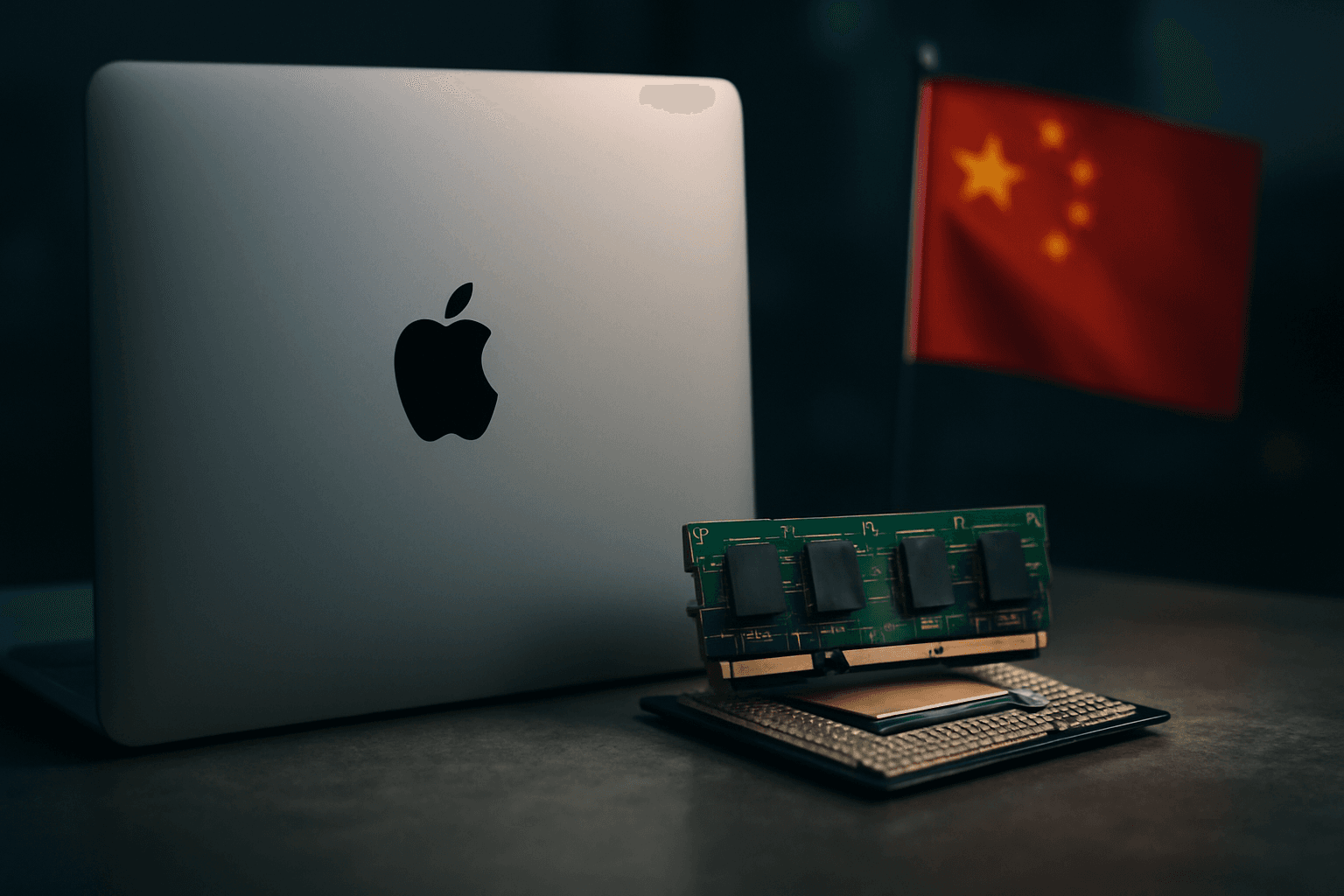
Apple is seeking permission from the U.S. government to incorporate memory chips from Chinese manufacturers into its products sold internationally, aiming to tackle soaring costs and supply shortages. This request has sparked a fierce lobbying battle with Micron Technology, the only major American memory chip producer, which warns that allowing Chinese chips could jeopardize the domestic semiconductor industry.
Over the past year, memory chip prices have quadrupled, driven largely by growing demand from AI data centers that consume vast amounts of specialized memory. This surge has tightened supply for smartphones, automotive systems, and medical devices, squeezing Apple’s usual use in negotiating with suppliers.
Tim Cook, Apple’s CEO, has met with high-level officials from the Trump administration, including Commerce Secretary Howard Lutnick and Treasury Secretary Scott Bessent, to push for approval to source chips from China’s ChangXin Memory Technologies (CXMT) and Yangtze Memory Technologies (YMTC). Importantly, Apple proposes to restrict the use of these Chinese-made chips to products sold outside the U.S., avoiding domestic distribution.
Micron’s CEO, Sanjay Mehrotra, has expressed strong opposition, likening the threat to the decline of American steel and manufacturing sectors due to foreign competition. He cautions that even sourcing Chinese chips for overseas products could erode the U.S. semiconductor industry’s foundation.
The Pentagon has already designated CXMT and YMTC as military-affiliated entities, adding security concerns to the debate. The White House must balance the need to keep consumer electronics affordable against protecting vital domestic manufacturing capabilities.
This clash represents a critical decision point, with Apple seeking to ease global chip shortages and manage costs, while Micron fights to preserve American technological leadership. The outcome could reshape supply chains and influence the future of semiconductor production.