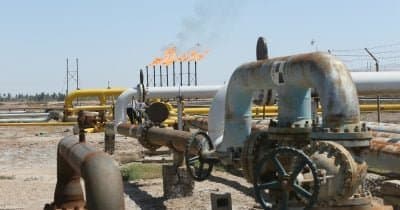
US energy companies signed deals worth $60 billion with Iraq to develop oil pipelines that would reroute supply away from the Strait of Hormuz. The agreements, finalized at the US Chamber of Commerce on July 17, target new infrastructure aimed at reducing geopolitical risks linked to this critical shipping passage.
Chevron leads the group with three preliminary contracts granting stakes in two major oil fields in Iraq: West Qurna-2 and Nasiriyah. These fields hold billions of barrels of recoverable oil, making them vital to the region’s energy landscape. Chevron is also part of a consortium exploring a pipeline from Iraq to Syria’s Mediterranean coast, which would allow crude to bypass Hormuz entirely by transporting it overland to a Mediterranean port.
Additional Participants and Strategic Implications
Other US companies involved include ConocoPhillips, HKN Energy, and Halliburton, all engaging in production and infrastructure projects across Iraq’s oil sector. The pipeline initiatives under discussion aim to restart flows of roughly 250,000 barrels per day through routes that avoid the Strait of Hormuz. This volume represents a substantial increase in Iraq’s export capacity along alternative corridors.
The strategic urgency comes after disruptions in 2026 exposed the vulnerability of relying on Hormuz as the main export route. Historically, Iraq has depended heavily on Basra’s southern outlets, which funnel oil through this narrow waterway. Recent events accelerated efforts by Baghdad to diversify export routes, including enhanced use of the northern Kirkuk-Ceyhan pipeline to Turkey’s Mediterranean port and exploratory routes through Syria and Jordan.
The $60 billion commitment from US firms aligns with official US government goals to deepen commercial ties with Iraq’s oil industry. For global energy markets, the new pipeline projects promise greater supply security by opening Mediterranean access for Iraqi oil, bypassing politically sensitive maritime choke points.
This material is informational and does not constitute financial advice.