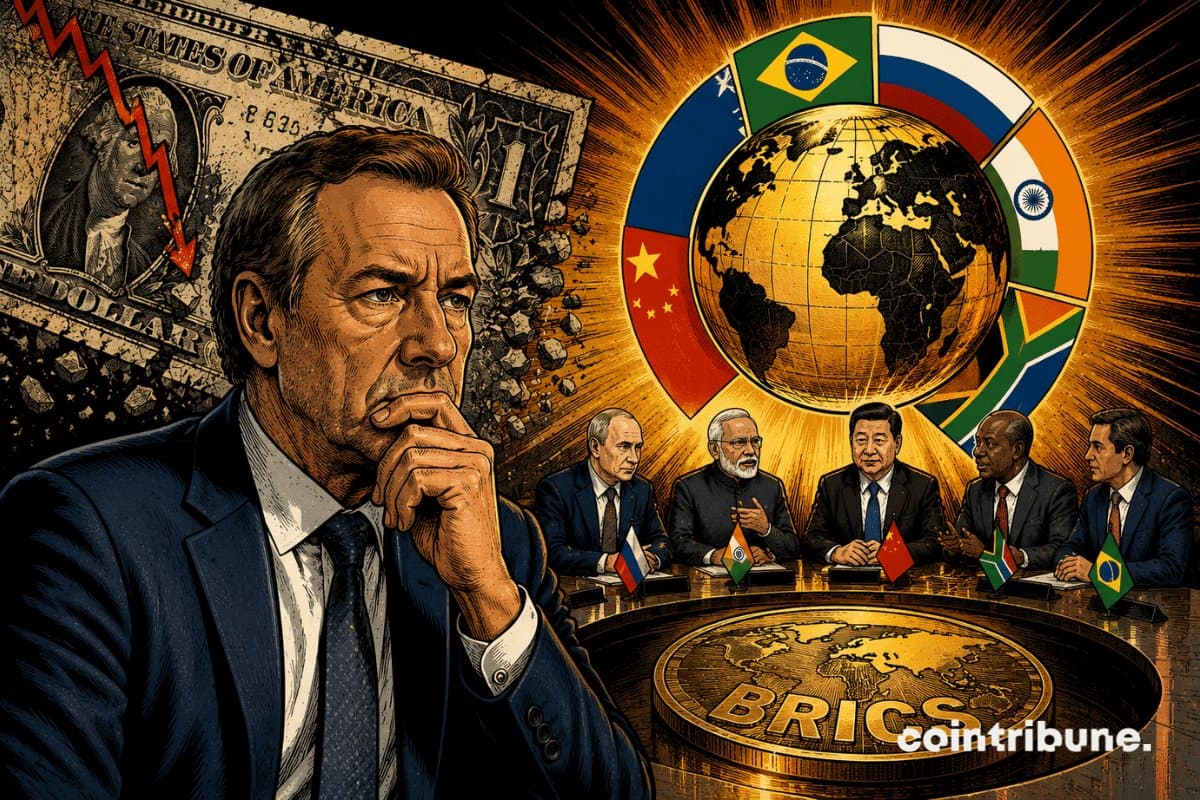
Jim O’Neill, the economist who coined the BRIC acronym in the early 2000s, has changed his stance on the feasibility of BRICS countries establishing a financial system that competes with the US dollar. He now acknowledges that this is a credible possibility, highlighting shifts in geopolitical dynamics and payment technology advances.
Shift in Perspective on BRICS Financial Ambitions
O’Neill previously dismissed the idea that the BRICS coalition could create an alternative financial network as unrealistic due to economic differences within the bloc. Eighteen months ago, he described such a project as pure fantasy. However, he now recognizes that this view is outdated given recent developments, stating that the global financial community, including the G7, must consider the challenge posed by the BRICS alliance.
Role of Technology in Enabling Change
The rapid growth of digital payment infrastructures and decentralized financial rails over the past year and a half is the primary driver behind this reassessment. Significant technical progress in cross-border interbank transfers and trade digitization has created possibilities for efficient payment systems independent of traditional US-led channels.
Institutional Progress and Strategic Approach
O’Neill points out that the New Development Bank, established by BRICS, remains a tangible achievement in their financial cooperation. He also dismisses the prospect of a sudden global replacement of the dollar; instead, he envisions a bilateral settlement currency anchored by a basket of different currencies aimed at facilitating trade settlements.
This development is taking place amid increasing trade tensions and frequent US sanctions that motivate countries holding 75% of global GDP to explore alternatives to the dollar-based financial order.
Markets have responded with modest adjustments as the evolving geopolitical landscape and digital payment transformation reshape international finance.