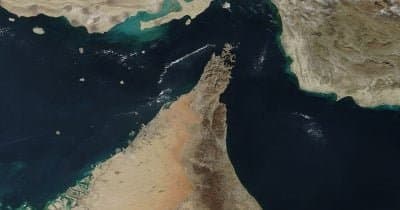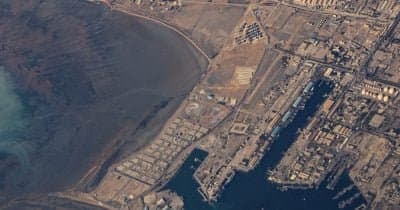
In a significant escalation of military actions, the United States launched a strike on the Bandar Abbas rail junction early on Friday, according to Iran's state news agency IRNA. This marks the sixth consecutive night of airstrikes in the ongoing conflict, which began due to Iranian attacks on commercial vessels in the Strait of Hormuz.
The strike is particularly notable as it targets a crucial logistical hub near Iran's largest port and military sites associated with the Revolutionary Guards. This shift in strategy suggests an increased focus on disrupting Iranian infrastructure and supply lines.
Market Reactions and Predictions
Market analysts have reacted to the U.S. strike, indicating a perceived decrease in the likelihood of visits by the International Atomic Energy Agency (IAEA) to Iranian nuclear sites. Current market pricing reflects heightened security concerns, with the probability of an IAEA visit by July 31 estimated at just 1.1% and a marginally increased likelihood of 5.1% for August 31.
As the conflict continues, projections suggest ongoing instability in the region, with a noted 8.5% chance of regime change in Iran by the end of the year. This ongoing military action aligns with predictions of sustained tensions that could further affect related markets.
Future Developments to Monitor
Observers are advised to closely monitor further military developments, as additional U.S. or Israeli strikes could significantly influence the situation. Statements from IAEA Director General Rafael Mariano Grossi and Iranian officials will be critical in assessing future diplomatic engagements. If Iranian Minister of Atomic Energy Mohammad Eslami cites security reasons for denying access, it could complicate international relations.
As the situation evolves, the broader geopolitical landscape may also shift, influencing the dynamics surrounding Iran and its nuclear capabilities.
This article is for informational purposes only and does not constitute financial advice.