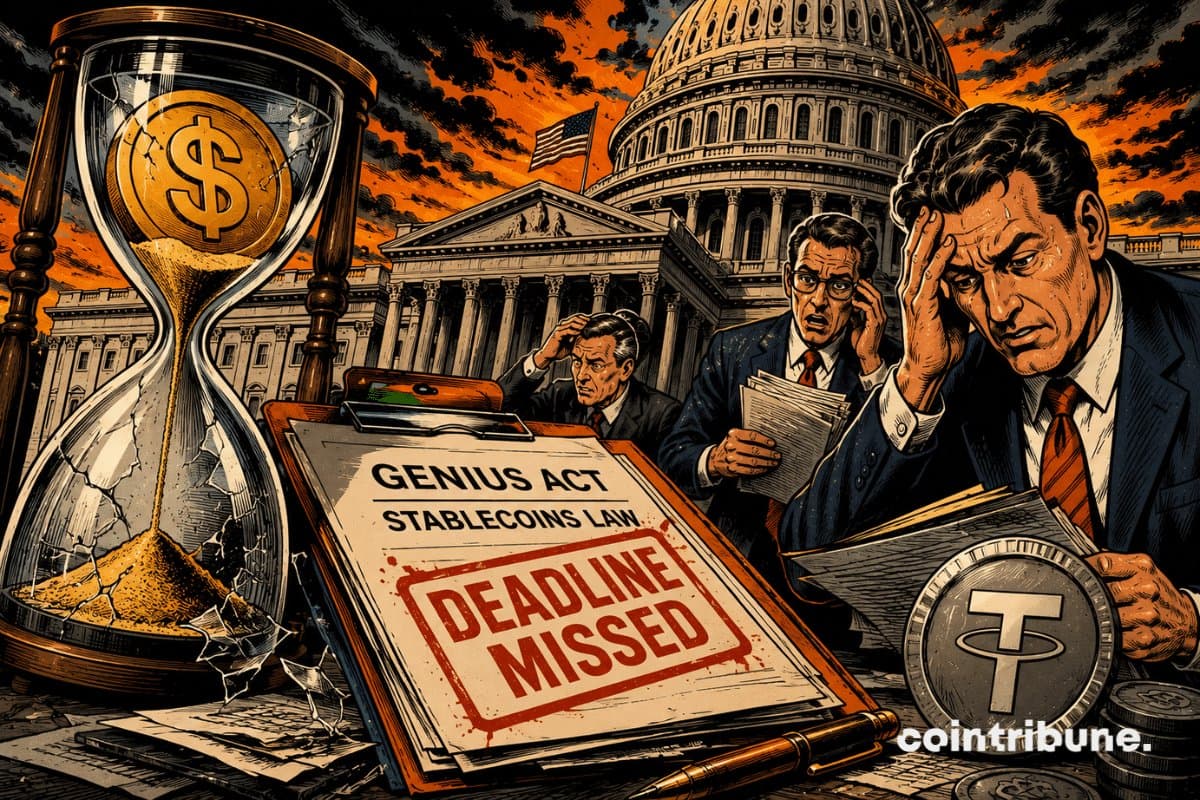
Federal agencies in the U.S. failed to meet the July 18, 2026 deadline to finalize rules implementing the GENIUS Act, leaving stablecoin issuers without a completed regulatory framework one year after the law was signed. While ten proposed rules have been published, none have been adopted in final form.
President Donald Trump enacted the GENIUS Act on July 18, 2025, establishing the first full federal framework aimed at regulating stablecoins. The law tasked agencies including the Treasury Department, Office of the Comptroller of the Currency (OCC), Federal Deposit Insurance Corporation (FDIC), National Credit Union Administration (NCUA), and Federal Reserve with issuing implementing regulations within one year.
Since the law’s passage, the Treasury Department has led with four proposed rules covering areas such as the overall implementation of the GENIUS Act, state and federal regulatory equivalence criteria, foreign issuer registration, and anti-money laundering standards. The OCC has contributed two proposals focused on supervision standards and nationally chartered issuers. The FDIC issued a proposal concentrating on insured institutions’ reserve management, while the NCUA proposed extending stablecoin issuance to federally insured credit unions. An interagency rule was also filed to harmonize supervision between the OCC, Federal Reserve, and FDIC.
The absence of finalized regulations perpetuates uncertainty for stablecoin issuers, investors, and market participants awaiting clarity on compliance requirements. The delay follows multiple public consultations and requests for comment but no conclusive action before the statutory deadline.
On the one-year anniversary of the GENIUS Act, crypto bank Anchorage Digital urged Congress to advance the CLARITY Act, a separate legislative initiative aimed at enhancing the regulatory environment for stablecoins. This ongoing legislative and regulatory process remains a key focus for the U.S. crypto sector.