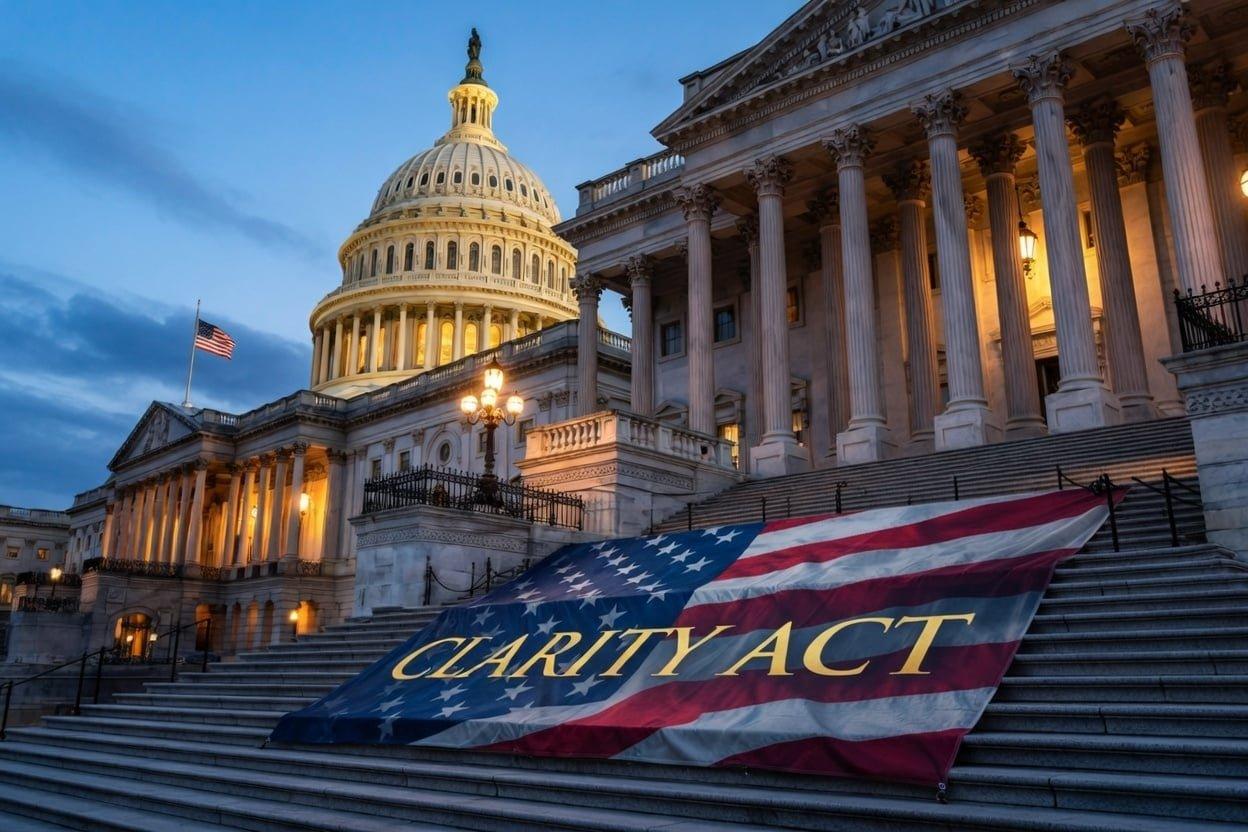
Senator Cynthia Lummis is advocating for swift action on the CLARITY Act, which aims to establish clear regulations for digital assets within the United States. The legislation, described by Lummis as pivotal for the future of financial services, has successfully passed the House and the Senate Banking Committee but awaits a full Senate vote, which has yet to be scheduled.
The urgency is underscored by the upcoming August 7 deadline, the last day the Senate will be in session prior to its summer break. Failure to vote on the CLARITY Act by this date risks delaying its progress until at least 2027.
Overview of the CLARITY Act
The CLARITY Act would divide regulatory responsibilities for cryptocurrency oversight between the Securities and Exchange Commission (SEC) and the Commodity Futures Trading Commission (CFTC). The SEC would maintain oversight over investment contract assets, while the CFTC would expand its role in regulating digital commodity spot markets. Additionally, the legislation would mandate that crypto exchanges and brokers separate customer funds from company funds, a measure that responds to previous failures in the exchange sector.
- The bill allocates $150 million for investigations into crypto-related fraud.
- It would require certain digital asset firms to comply with Bank Secrecy Act reporting standards.
Supporters of the bill assert that it replaces an enforcement-heavy policy with a coherent regulatory framework. However, critics argue that it does not provide adequate protections for users and decentralized finance.
Political Challenges Ahead
Currently, the primary obstacle to advancing the CLARITY Act lies not in its technical aspects but in political disagreements. Democratic senators demand the inclusion of ethics provisions within the bill to prevent high-ranking officials, including the president and members of Congress, from profiting off crypto investments. This push has intensified in light of former President Trump's recent financial disclosure, which revealed that he earned approximately $1.4 billion from crypto activities, including earnings from a memecoin venture.
Senator Elizabeth Warren has emphasized the necessity of stringent ethics measures, stating the bill must prevent individuals in power from benefiting from the crypto sector. Meanwhile, Senator Ruben Gallego, having previously voted the bill out of committee, indicates he would further pursue measures against alleged corrupt practices in the crypto industry but has not guaranteed his support in a full Senate vote.