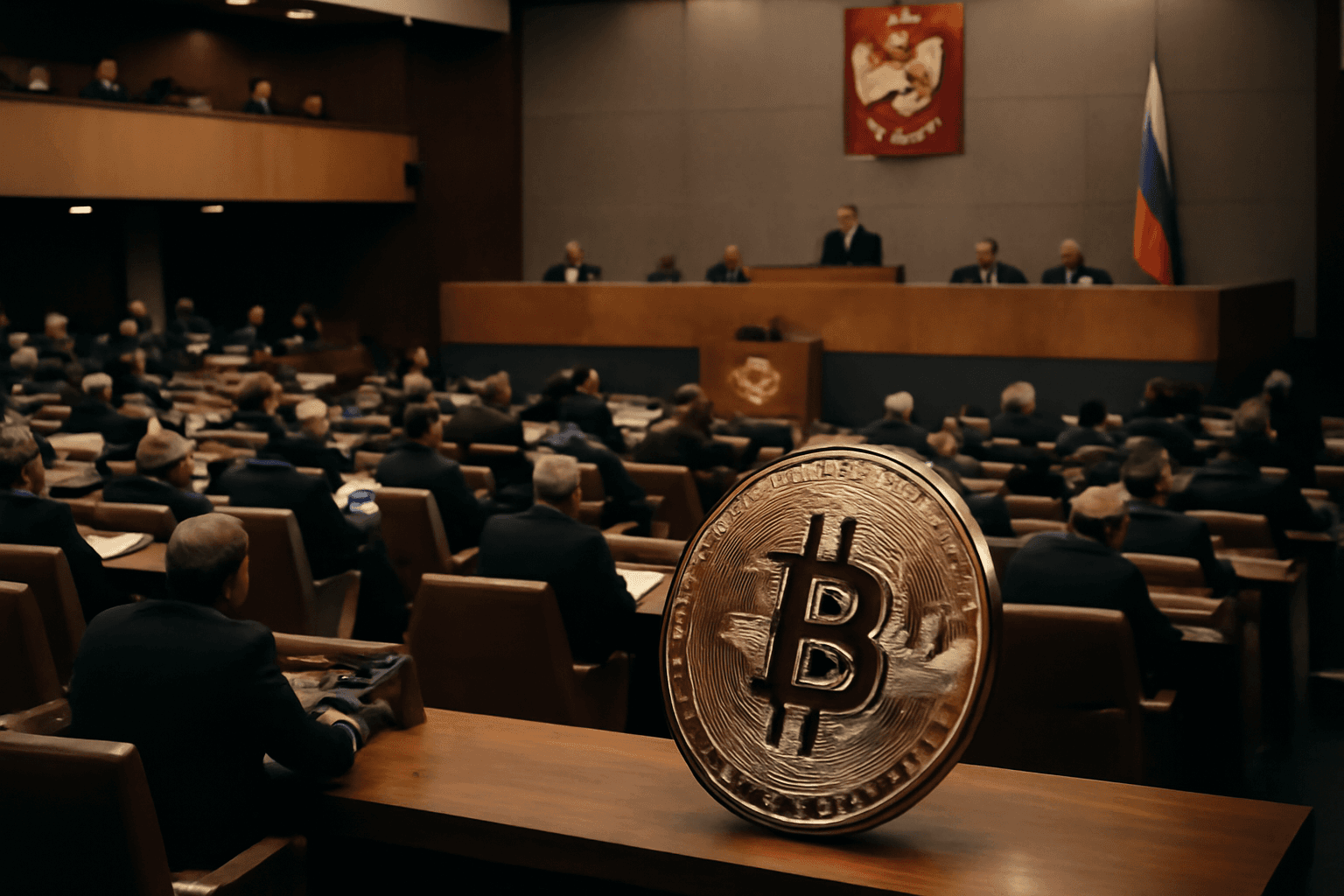
Russia's State Duma has passed a full law regulating crypto exchanges, custodians, and brokers while banning crypto payments within the country. The new framework will take effect from September 1, 2026, introducing a registration system and stricter oversight of digital asset services.
Key Provisions of Russia's Crypto Legislation
The law creates a registry for authorized crypto market participants, allowing existing platforms to operate without registration until July 1, 2027. Banks are required to block transactions involving unlicensed crypto exchanges, expanding their role in enforcement. Digital asset owners gain judicial protection for previously undeclared holdings, enabling legal defense of their assets.
Retail investors can purchase highly liquid cryptocurrencies through licensed intermediaries with an annual cap of approximately 300,000 rubles ($3,800) per intermediary. Qualified investors will have fewer restrictions and access to a broader range of crypto assets. The Bank of Russia will oversee market structure and issue specific regulations for licensed entities.
The legislation prohibits Bitcoin and other cryptocurrencies for domestic payments, maintaining the ruble as the primary currency for local commerce. Advertising or promotion of crypto payments by financial institutions is also banned.
However, the law permits Russian companies to use approved digital assets for certain cross-border settlements with foreign entities. This measure aims to support trade amid ongoing sanctions pressure. The European Union has noted Russia's growing reliance on cryptocurrencies for international transactions.
Additional provisions cover crypto mining, issuance, circulation, and services provided by brokers, asset managers, trading platforms, and clearing houses, bringing multiple market segments under formal regulation.
Major Russian banks such as Sberbank, VTB, T-Bank, Moscow Exchange, and Alfa-Bank are preparing to launch custody, trading, and digital asset infrastructure in line with the new rules. Alfa-Bank has already conducted limited crypto trading tests with eligible investors.
Market and Global Context
This legislative development occurs as global crypto regulations accelerate. Japan recently reclassified cryptocurrencies as financial products with a new law effective July 15, 2026. Russia’s approach contrasts with other markets by banning domestic crypto payments while enabling foreign trade settlements.
The new law highlights a cautious but strategic integration of crypto into Russia's financial system, particularly in facilitating international commerce despite sanctions. Banks' expanding roles in compliance and service provision indicate a move toward institutional adoption.
This content is for informational purposes and does not constitute financial advice.