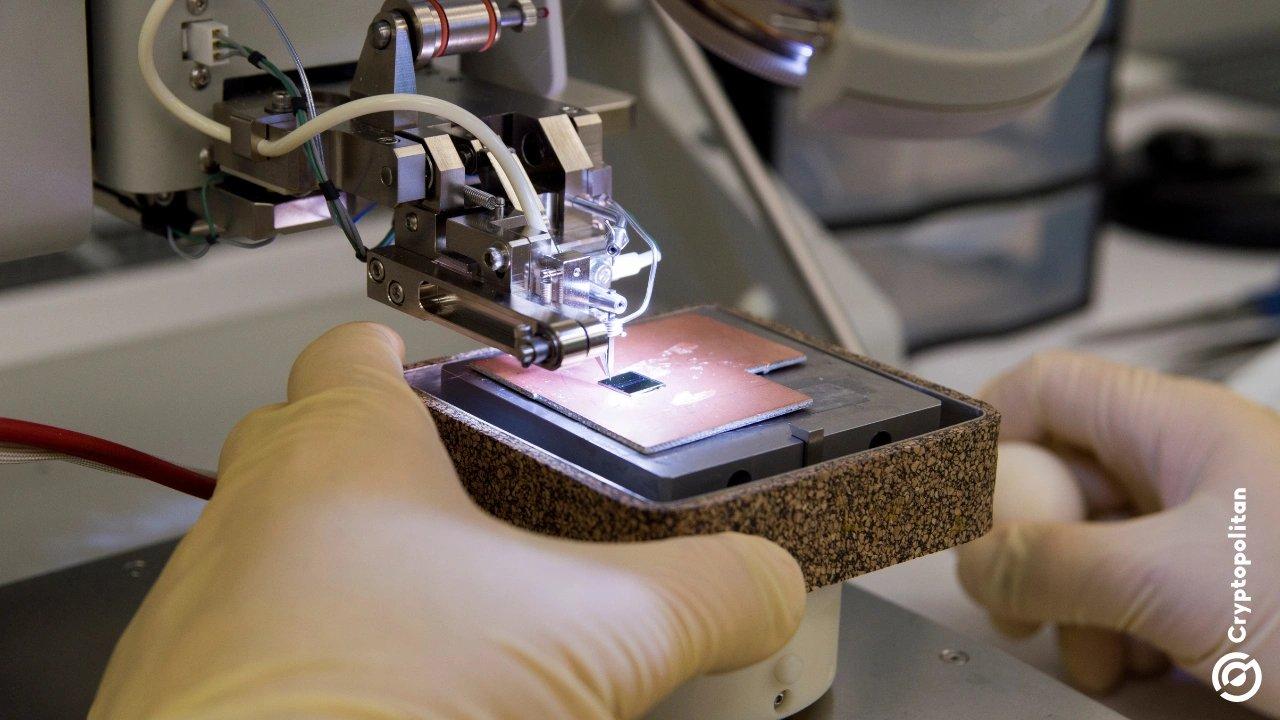
Meta Platforms is set to commence production of its first in-house AI chip, named Iris, in September 2026. This initiative aims to reduce the company's reliance on external suppliers while controlling compute costs.
The chip will be designed in partnership with Broadcom, while fabrication will be handled by Taiwan Semiconductor Manufacturing Company (TSMC). The announcement follows an internal memo indicating that the design of the Iris chip passed testing with no major faults within a brief six-week period.
Importance of Meta's Chip Development
The establishment of an in-house chip may have significant implications for Meta's operational efficiency. As the company relies heavily on processing power to support its core social media platforms like Facebook and Instagram, developing its own technology provides:
- Enhanced control over production timelines and costs.
- Reduced dependence on Nvidia and AMD during their chip release cycles.
- A pathway for Meta to scale its AI capabilities without reliance on external suppliers.
Meta's internal memo highlighted the difficulties in competing with Nvidia (NASDAQ: NVDA) and AMD (NASDAQ: AMD) for the latest GPU technologies, describing the situation as a "heavy lift" cost-wise and in terms of time. Although Iris may not entirely eliminate the need for these manufacturers, it could lead to significant shifts in their business with Meta.
Future Hardware Expansion and Implications
The Iris chip is the first of four planned generations under Meta's Meta Training and Inference Accelerators (MTIA) program, which was initially discussed in March. Alongside Iris, the company’s broader hardware strategy includes increasing its compute capacity to seven gigawatts by 2026, doubling that figure shortly thereafter.
This strategic move aligns with the estimated $145 billion that Meta has invested in AI infrastructure this year, showcasing the company's strong commitment to advancing its capabilities in artificial intelligence.
Looking Ahead
As the rollout of the Iris chip approaches, industry observers will be watching for key developments regarding its performance and the impact it may have on Meta's relationships with its existing chip suppliers. Additionally, it will be essential to monitor upcoming technology showcases and Meta's ongoing hardware expansion plans.
Disclaimer: This material is for informational purposes only and is not financial advice.