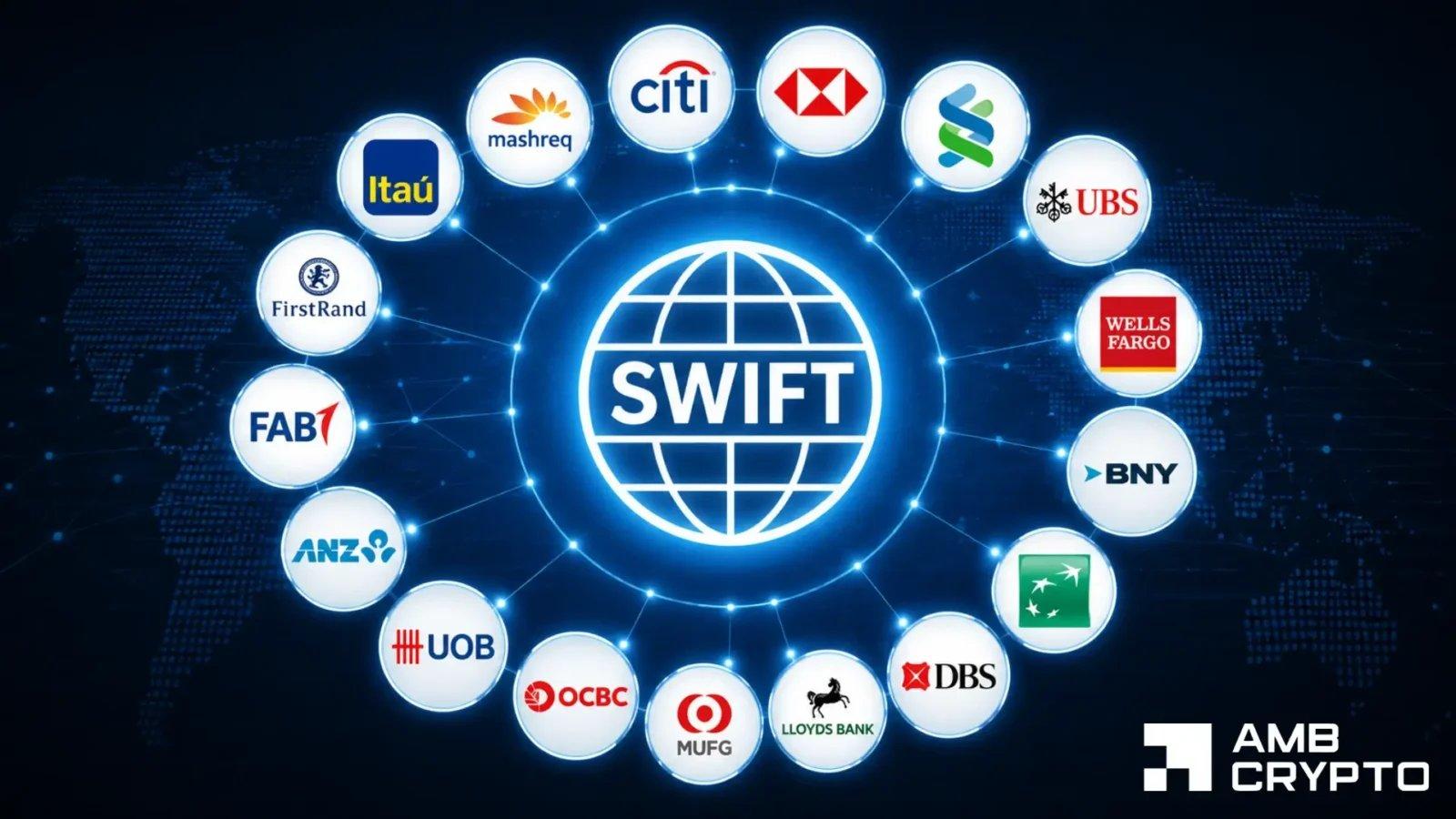
Swift has transitioned its blockchain ledger from development into real-world application, as it prepares to collaborate with 17 banks across six continents for initial trials of tokenized cross-border payments.
This initiative marks the first live application of Swift's ledger technology, allowing participating banks to provide 24/7 payment services while still settling transactions through the existing financial infrastructure. This development indicates a rising trend in the institutional adoption of regulated digital asset technologies, moving away from public blockchain solutions.
Significance of the Development
The capability to process cross-border payments around the clock is expected to enhance liquidity management, payment flexibility, and transparency without altering the current compliance and risk management protocols in place within the global banking system.
- 17 global banks involved in initial pilot
- Real-time cross-border payments facilitated
- Compatible with existing settlement systems
This venture was launched less than a year after the project was initially announced, showcasing the cooperative’s quick development cycle. According to Swift, the shared ledger functions as an orchestration layer, enabling banks to utilize tokenized deposits from their respective ledgers for faster fund transfers before final settlement is made through established payment systems.
Details on Participating Institutions
The participating banks include major financial players such as Citi, HSBC, and Standard Chartered, among others. Swift designed and constructed the ledger in only nine months, gathering insights from various financial organizations. The cooperative anticipates further enhancements to the platform after the completion of this initial controlled live phase.
With 75% of payments reaching beneficiary banks within 10 minutes, and often quicker, the existing infrastructure underscores the effectiveness of Swift's network. Several participating institutions have remarked that tokenized deposits could lead to better liquidity efficiency, increased payment clarity, and expedited settlements while still operating within the regulatory framework.
Future Implications to Monitor
As Swift continues to refine its ledger, industry observers should pay attention to the ongoing effects of these pilots on the landscape of cross-border payments. The incorporation of tokenized deposits into mainstream use may influence broader adoption rates and inspire future innovations in programmable money and digital commerce.
This content is for informational purposes only and does not constitute financial advice.