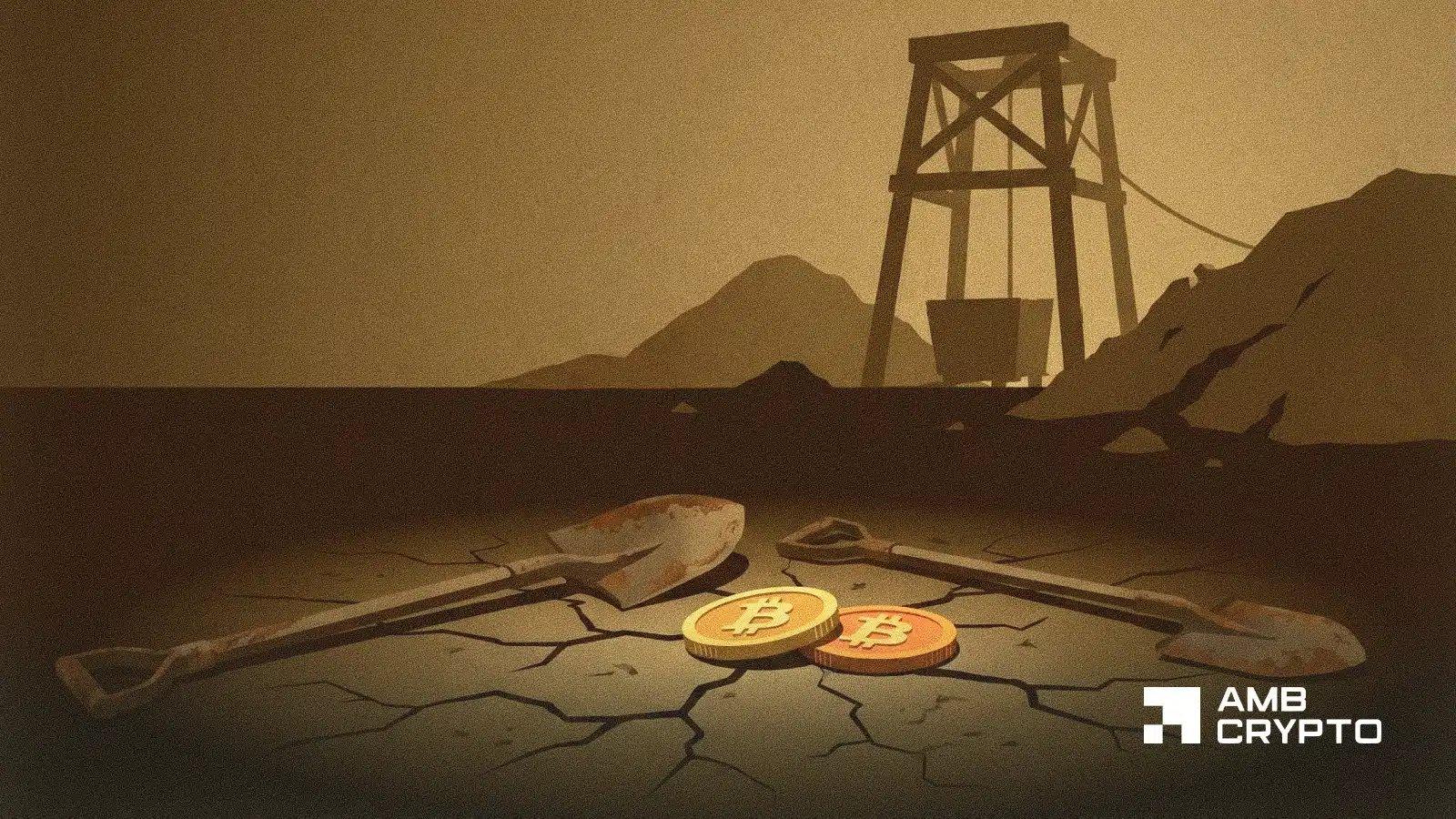
The current state of Bitcoin's mining ecosystem has seen its Stress Composite reach unprecedented lows, reminiscent of capitulation phases marked in past cycles such as 2015, 2018, 2020, 2022, and 2024. This downturn coincides with a consistent trend of miner distress post-halving as mining difficulty remains elevated following two recent downward adjustments.
According to data from Glassnode, the depressed mining profits are forcing weaker miners to liquidate reserves, while the stronger operators are likely to enhance their operational efficiencies to sustain their positions in the market. This dynamic decrease in forced sales could eventually stabilize the Bitcoin network.
Market Sentiment and Miner Dynamics
As conditions for miner capitulation begin to stabilize, investor sentiment is similarly experiencing historical lows, with the Bitcoin Sharpe ratio noted at -20 before recently showing some signs of recovery. This period marks one of the most challenging phases for risk-adjusted returns, following three successive negative quarters including a notable 16.1% loss.
Although there are increasing concerns regarding Bitcoin ETF outflows and miner stress that amplify capitulation risks, valuations remain above previous historical lows. Notably, earlier cycles in 2015, 2018, and 2022 displayed similar Sharpe Ratio declines, which led to significant accumulation phases as selling pressure diminished.
Future Market Projections
This ongoing miner capitulation narrative aligns with broader market trends, suggesting that if volatility subsides and long-term holders persist in absorbing supply, Bitcoin may shift from a defensive stance towards establishing a more robust market foundation. Thus, the current conditions might give way to a favorable environment for recovery.
Summary of Findings
Bitcoin miner stress has plummeted to historically low levels, underscoring signs of a wider capitulation trend. The profound extremes of the BTC Sharpe ratio reflect the deep-seated investor pessimism typically observed at cycle turning points.