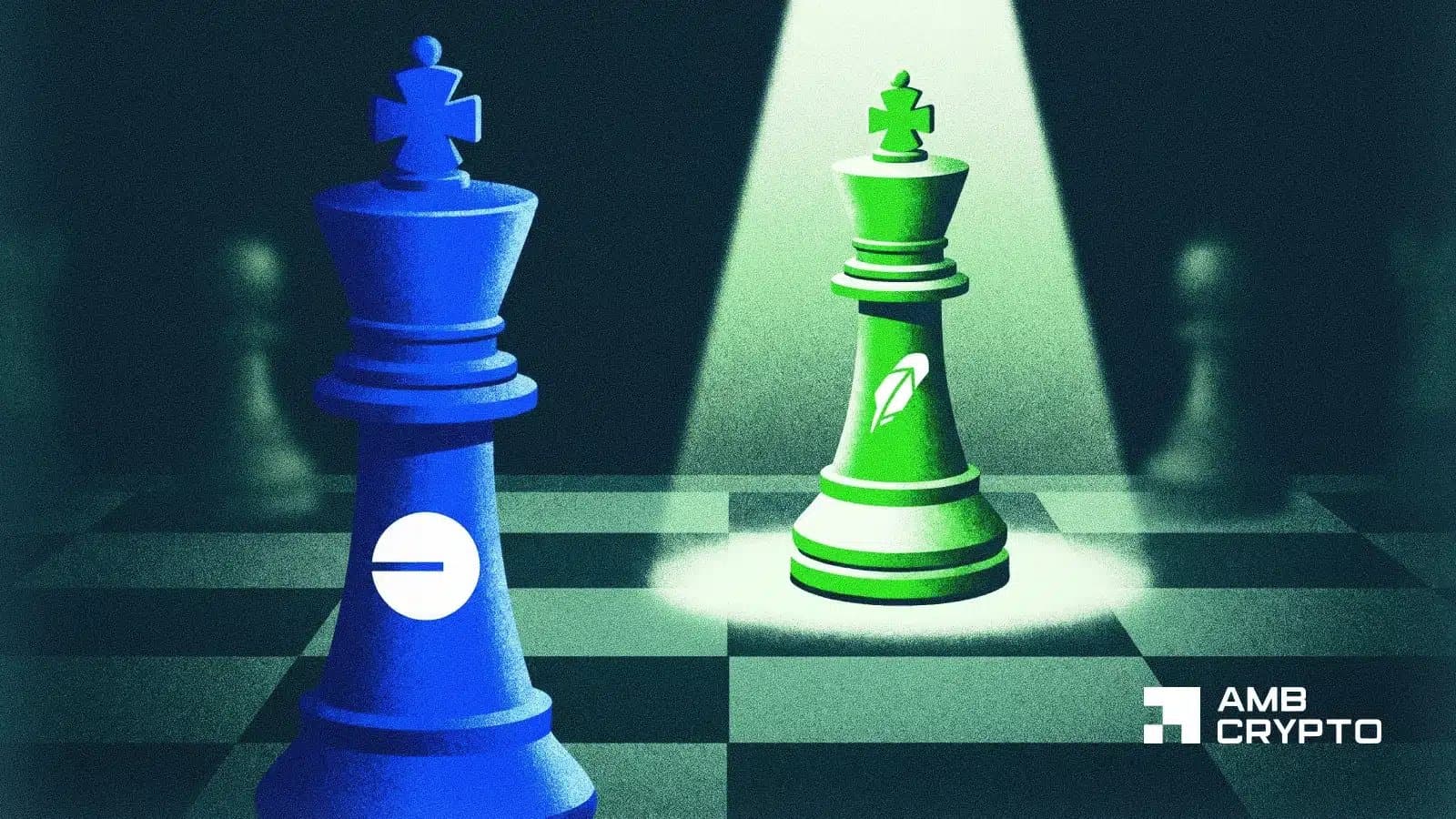
Jesse Pollak, co-founder of Base, admitted the project's delay in tokenizing equities within an EVM-compatible environment but downplayed Robinhood Chain's rising competitive threat. While Robinhood Chain has quickly captured large user interest after launching three weeks ago, Pollak emphasized Base's plan to offer tokenized stocks fully backed 1:1 by actual equities, contrasting Robinhood's derivative model.
Base’s Strategic Shift and Product Approach
Pollak expressed frustration about Base lagging behind Robinhood Chain in tokenized equities on Ethereum Layer 2. He attributed the setback to Base initially focusing on social experiments like creator coins rather than tokenization. This aligns with Coinbase CEO Brian Armstrong’s recent admission that excessive attention to social tokens caused them to miss the tokenization trend.
In response, Base pivoted toward trading, payments, AI agents, and tokenization. The project aims to surpass Robinhood Chain by offering 1:1 backed tokenized equities, which Pollak claims will deliver better scalability, trust, capital efficiency, and acceptance by institutional investors. However, it remains unclear if Base’s tokens will confer voting rights or direct dividends, as most current tokenized stocks reinvest dividends automatically and exclude voting rights.
Robinhood Chain’s Rapid Adoption and Market Impact
Launched recently, Robinhood Chain has leveraged the memecoin hype to gain speculative user attention. The chain now rivals Base on key metrics, including reaching roughly 1 million weekly active users, comparable DEX volume, and slightly higher revenue. Within its first month, Robinhood Chain challenged Base’s standing as the third-largest Ethereum Layer 2 chain for speculative trading.
Analysts highlight Robinhood’s existing brokerage business with 27 million funded accounts as a significant advantage for expanding tokenized equities and crypto trading onchain. Bernstein analysts project Robinhood's stock (HOOD) could climb to $160 due to this strategic positioning.
Industry Context and Tokenization Trends
Most tokenized stocks today are synthetic derivatives reflecting price performance but normally lacking shareholder rights. A notable comparison includes Ondo’s 1:1 backed tokens, also without voting rights and with reinvested dividends rather than direct payouts.
Base’s upcoming tokenized asset model thus challenges the current paradigm, potentially offering more trust and institutional compatibility. The dynamic competition between Base and Robinhood Chain illustrates an evolving landscape where crypto-native product design intersects with traditional brokerage strengths.
This content is for informational purposes and should not be considered financial advice.