Why Bitcoin Still Hasn't Hit a New All-Time High: Tether Advisor Gabor Gurbacs Explains
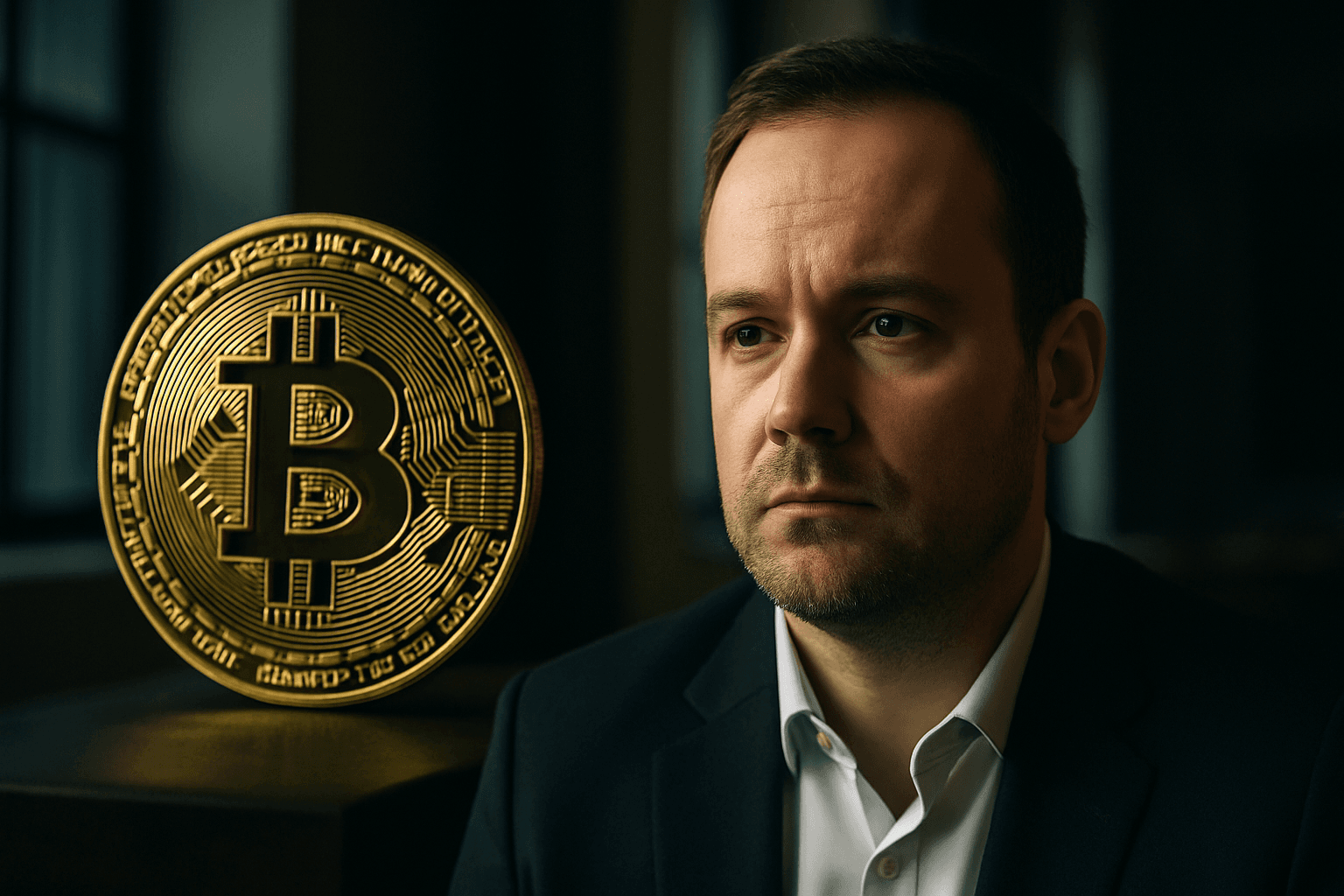
Bitcoin continues to trade well below its historical price peak, even as traditional markets like the S&P 500, QQQ, and gold repeatedly set new records. According to Gabor Gurbacs, an adviser to Tether, the prolonged underperformance of the world's leading cryptocurrency can be traced back to a fundamental deterioration of the conversation happening within the crypto industry itself.
Gurbacs argues that a substantial portion of the Bitcoin ecosystem has been effectively hijacked by what he calls "tourists" — participants who prioritize hype cycles, clickbait content, and derivative products over meaningful infrastructure development and long-term value creation. In his words, "deeply unserious people took over large parts of the Bitcoin conversation, selling weak products and recycled narratives instead of building conviction, infrastructure and distribution. That's a big reason Bitcoin isn't at ATHs now."
The Tether adviser draws a sharp contrast between the current state of the market and the crypto community that existed before 2017. The early Bitcoin movement was deeply rooted in cypherpunk ideology, the concept of sound or "hard" money, and the participation of disciplined capital markets professionals. These were individuals driven by mission and principle rather than short-term profit.
"These were deeper, more principled and mission-oriented people," Gurbacs stated, adding that if he could change one thing about crypto history, he would have preferred the real-world asset tokenization wave to have emerged in 2017 rather than the ICO boom that actually occurred.
Beyond the cultural and narrative degradation, Bitcoin is also facing concrete supply-side pressure. Data tracking institutional capital absorption versus early holder distribution revealed the worst weekly net inflow result of the current market cycle just last week. The cumulative balance for this metric has dropped to negative 154,169 BTC since the market peaked in October 2025.
This dynamic highlights a deeper paradox at the heart of the current cycle. Institutional capital has entered the crypto space in significant volume, yet it continues to be diluted by an overwhelming amount of speculative noise. The result is an ecosystem that struggles to retain long-term value, even as fresh money flows in.
The desynchronization between Bitcoin and traditional defensive assets — which are hitting record highs — suggests that market participants are not treating BTC as the store-of-value asset it was originally designed to be. Instead, speculative behavior and low-quality narratives are clouding its investment thesis.
Despite these headwinds, Gurbacs remains constructive on Bitcoin's long-term trajectory. He is clear that the current challenges stem not from any flaw in the technology itself, but from the poor quality of actors attempting to exploit it for short-term gains. In his view, once the noise clears and more principled participants reclaim the conversation, Bitcoin's fundamental strengths will reassert themselves.
For now, the flagship cryptocurrency remains in a holding pattern — not because it has failed, but because the environment surrounding it has been cluttered with distraction, speculation, and narratives that ultimately drain rather than build value.