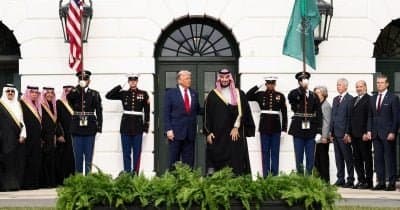
On July 22, 2026, the United States and Saudi Arabia signed a nuclear cooperation agreement that omits the so-called 'gold standard' clause, the provision that would have explicitly barred Riyadh from enriching uranium or reprocessing spent nuclear fuel on its own soil.
The absence of that clause marks a concrete departure from the non-proliferation benchmarks Washington has historically demanded from partners seeking civilian nuclear assistance.
Israel has signaled unease. The prospect of a Gulf state with enrichment capability sits uncomfortably close to its security calculus, and regional observers are already mapping out second-order effects.
Iran is the other variable. Prediction markets tracking a potential U.S.-Iran nuclear deal in 2026 have repriced downward since the announcement, with odds declining on scenarios that include uranium enrichment caps or reconstruction funding for Tehran.
The logic is straightforward: if Washington is willing to leave enrichment off the table for Saudi Arabia, Iran's negotiators have fresh use to resist tighter restrictions on their own program.
Market participants have trimmed confidence that any 2026 U.S.-Iran agreement would carry key terms such as enrichment caps or Iranian reconstruction financing. The moves are modest but directional.
Congress has not yet responded formally. Its reaction matters: lawmakers have previously used legislative tools to constrain executive nuclear agreements, and the Saudi deal is likely to draw scrutiny from both non-proliferation advocates and regional security hawks on Capitol Hill.
What happens next hinges on three things: whether Saudi Arabia moves toward actual enrichment activity, how Tehran reads the precedent in its own talks with Washington, and whether the U.S. Congress attempts to attach conditions retroactively.
This article is for informational purposes only and does not constitute financial or investment advice.