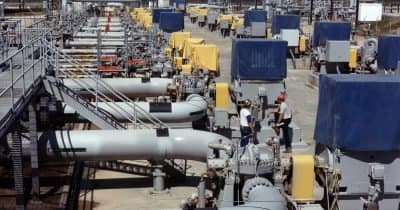
The US Strategic Petroleum Reserve (SPR) declined by 5.1 million barrels in the week ending July 20, 2026, reaching 311.4 million barrels, its lowest level since March 1983.
This drawdown is part of a government-authorized emergency release program targeting a total of 172 million barrels. Since the escalation of the US-Iran conflict in late February 2026, the SPR has decreased by over 104 million barrels.
Stored in salt caverns along the Gulf Coast, the SPR is designed to cushion the US economy against oil supply disruptions. However, the Government Accountability Office has highlighted operational risks linked to the SPR's infrastructure, warning that rapidly depleting reserves could complicate future refill operations.
Energy costs influenced by the SPR's thinning buffer affect industries heavily dependent on electricity. Bitcoin mining, which converts electricity into computational power, is particularly sensitive to rising energy prices resulting from geopolitical tensions and reduced oil reserves.
The drawdown has intensified discussion among Washington policymakers about creating a Strategic Bitcoin Reserve, an idea that has been circulating throughout 2026. The SPR’s current levels add momentum to this conversation.
Investors focusing on crypto sectors linked to energy should monitor electricity pricing in key Bitcoin mining hubs like Texas, where natural gas and grid conditions reflect broader energy market trends.
Refilling the reserve requires purchasing oil on the open market, and if the current pace of drawdown continues under the emergency program, the SPR will experience further depletion before any replenishment can occur.
This article is informational and not financial advice.