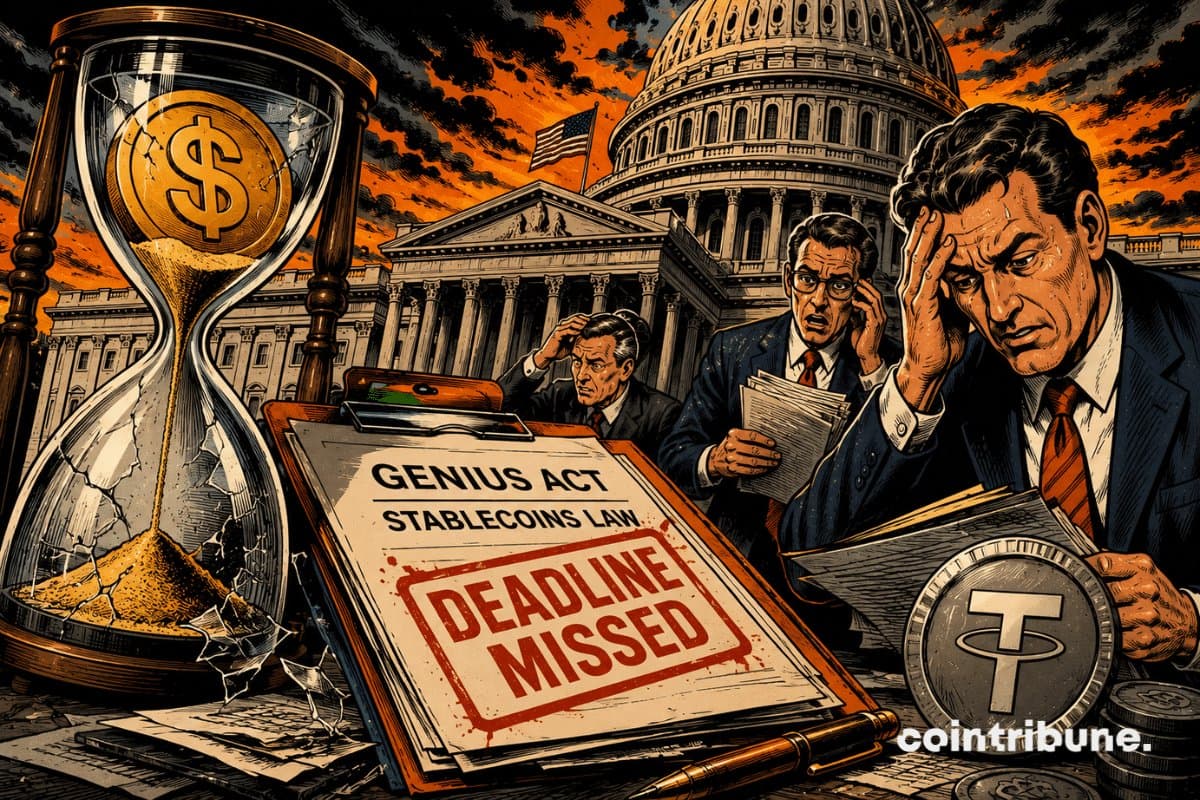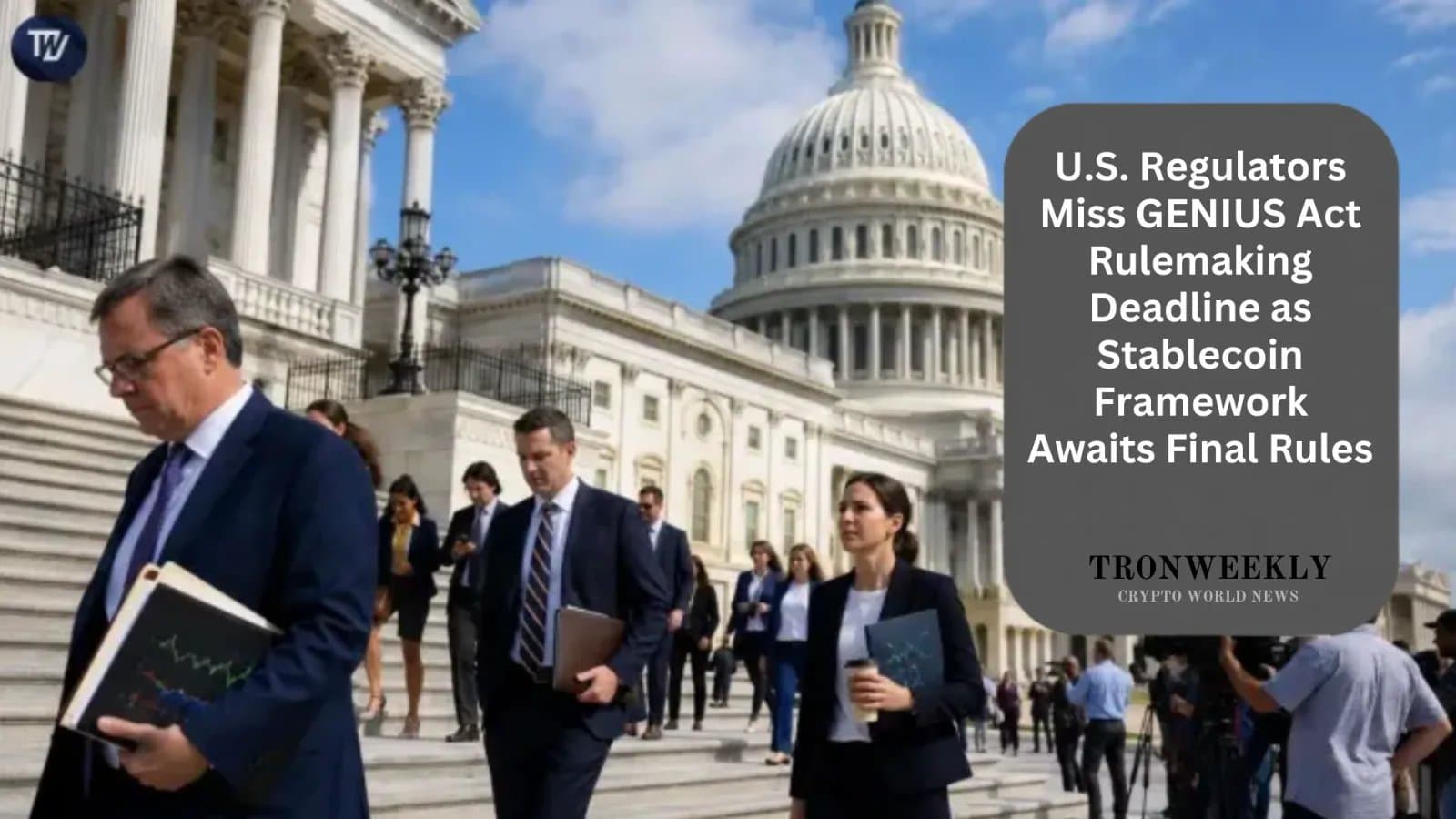
U.S. financial agencies missed the one-year deadline to finalize regulations under the GENIUS Act, leaving the federal stablecoin framework incomplete.
The law, signed on July 18, 2025, by then-President Donald Trump, aimed to create the first dedicated federal regulatory structure for stablecoins. It set standards on reserve backing, redemption rights, disclosures, licensing, and supervision, with a requirement for final rules within one year.
Despite this mandate, agencies including the Office of the Comptroller of the Currency (OCC), Federal Deposit Insurance Corporation (FDIC), National Credit Union Administration (NCUA), Treasury, Federal Reserve, and anti-money laundering bodies have yet to finish their rulemaking. Critical aspects such as reserve asset requirements, capital and liquidity management, custody standards, redemptions, operational risk, reporting, customer due diligence, sanctions compliance, and anti-money laundering remain unsettled.
The NCUA's latest proposal was published just one day before the deadline, not leaving sufficient time for public comment and finalization. Extensive feedback from stakeholders like BlackRock is under review; BlackRock has urged the OCC to remove the 20% cap on tokenized reserve assets, approve qualifying Treasury exchange-traded funds as reserves, and broaden acceptable securities.
This delay hinders stablecoin issuers, banks, credit unions, payment firms, and state regulators who are preparing for compliance without finalized federal rules. New York State has introduced its own framework aligned with the GENIUS Act but may need adjustments when federal rules are finalized.
The delay also raises concerns among lawmakers and state officials regarding the Treasury’s ability to assess state regulatory equivalence to federal standards.
material is informational and not financial advice